

























































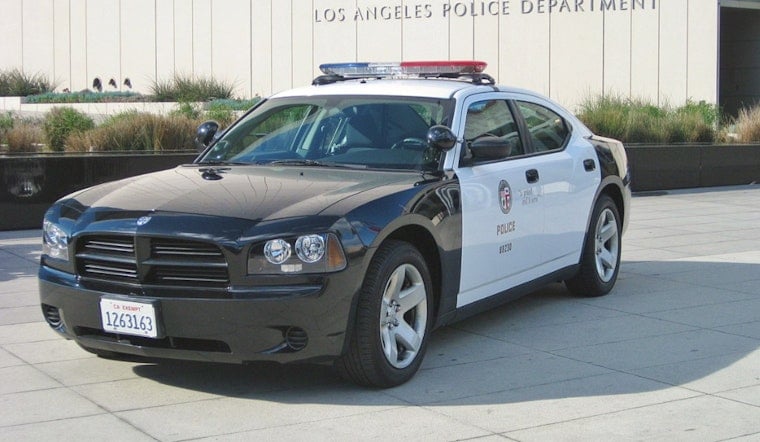
Los Angeles’ civilian police watchdog has concluded that officers who shot author Jillian Lauren during a tense Eagle Rock standoff “deviated from policy” when they opened fire, according to the New York Post. The finding drops fresh heat on a case that already drew national attention after the LAPD released body-camera and home-surveillance video of the April 8, 2025, confrontation.
With that conclusion on the record, city officials and the department are staring down a familiar but uncomfortable question: how well do officers handle fast-moving manhunts that spill across backyards in dense residential neighborhoods.
What the New York Post reported
The Post’s account says the Los Angeles Police Commission found that multiple officers and a supervising sergeant did not follow department policy when they fired on Lauren, and that the case has been kicked upstairs for possible discipline. The outlet describes the move as a significant rebuke of how the department handled the incident from a use-of-force standpoint.
According to the New York Post, the commission reached its assessment after reviewing the officer-involved shooting, a review that typically includes body-camera footage, reports, and investigative findings.
LAPD’s version of what happened
The Los Angeles Police Department says officers were backing up the California Highway Patrol on April 8, 2025, searching for three suspects tied to a nearby hit-and-run, when they spotted a woman in a neighboring yard armed with a handgun.
In the department’s preliminary narrative, officers repeatedly ordered the woman to drop the weapon. An officer-involved shooting followed after she allegedly pointed the gun at them. LAPD’s newsroom post labels the case Officer-Involved Shooting NRF012-25ma and lays out the bare-bones timeline the department released to the public. That summary is available through the Los Angeles Police Department.
Video, audio, and what they do not show
Police later pushed out body-camera clips, home-surveillance footage, and 911 recordings from the minutes before and after the gunfire. Investigators say they recovered a spent shell casing and a 9mm handgun at the scene.
The Associated Press reported that excerpts of the video and dispatch audio were released by the LAPD as part of a public update, even as Force Investigation Division detectives continued their work behind the scenes. As the Associated Press noted, those public clips stop short of answering every disputed point that remains under review, a reminder that edited video rarely settles an argument on its own.
Lauren’s account and the fallout in her life
In a later interview, Lauren said her “impulse was self-defense,” telling reporters that the encounter blew up her life. In the months that followed, she filed for divorce from Weezer bassist Scott Shriner.
Rolling Stone ran a profile in which Lauren described herself as trying to protect her family and called the aftermath devastating. “I was doing the best I knew to protect my family,” she said in that piece, while unpacking the personal and emotional toll of the shooting and its legal shadow.
What comes next: discipline and legal risks
On the criminal side, prosecutors later approved a two-year mental-health diversion for Lauren, a deal that could end with the case being dismissed if she completes the program and follows its terms, according to the Los Angeles Times. The diversion requires counseling, testing, and a ban on possessing firearms.
The New York Post’s coverage says the commission has now forwarded its findings for possible discipline, which would go to the department’s leadership for action. Los Angeles Police Chief Jim McDonnell is described as the city’s top uniformed official and would be in the position to act on any personnel recommendations that come out of the process.
Those dual tracks, criminal and administrative, mean there are still potential consequences on two fronts, even with the diversion in place.
Oversight, closed doors, and lingering community questions
The Board of Police Commissioners serves as the civilian oversight body for the LAPD. It is the panel that handles officer-involved shootings, can press for changes to department policy, and can sign off on disciplinary recommendations. Meeting agendas show that officer-involved shooting cases routinely land on the commission’s docket for closed-session review.
Critics argue that the combination of confidential meetings and layered internal reviews can leave neighbors feeling shut out, especially when high-profile cases collide with active criminal matters, as in Lauren’s situation. The board’s March agenda, posted by the Los Angeles Board of Police Commissioners, offers a glimpse at how OIS and discipline items quietly populate the panel’s regular calendar.
Whatever formal steps come next, the Eagle Rock shooting remains a flashpoint in the ongoing debate over how Los Angeles officers respond when a routine backup call turns into a fast-moving search through residential yards. The commission’s review gives Angelenos another look at those procedures, and it will also serve as a test of whether the department is willing to adjust how it trains and supervises officers when manhunts get chaotic.





