

























































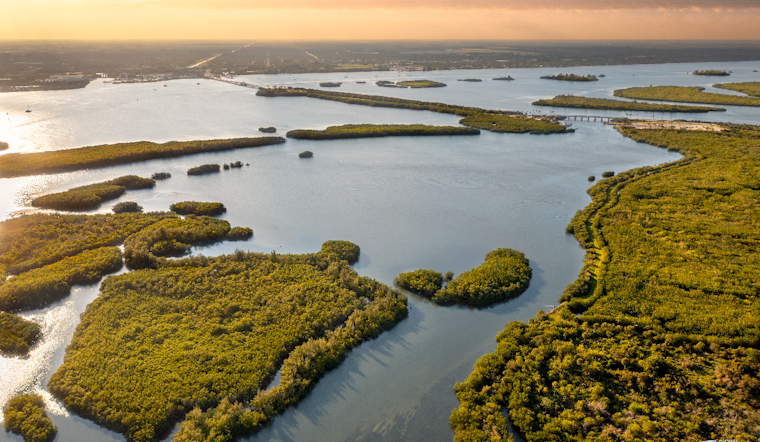
Brevard County is in a full sprint to get homes off aging septic tanks and hooked into central sewer, as cities try to stem the pollution choking the Indian River Lagoon. Local officials say the strategy mixes new sewer lines, homeowner incentives, and multiyear hookup schedules, all meant to cut the nitrogen and phosphorus that supercharge algae blooms and wipe out seagrass.
Cocoa, Merritt Island, Rockledge, Palm Bay, and Titusville have each launched their own plans to move entire neighborhoods onto sewer. Palm Bay has gone so far as to approve a four-year phased hookup schedule, complete with set homeowner fees and planned outreach to walk residents through the change. As reported by ClickOrlando, the local approaches differ in pace and structure but share a simple goal: get nutrient-leaking septic systems away from the lagoon’s edge.
County Funding And The Scale Of The Problem
The backbone of the effort is a voter-approved half-cent sales surtax that created the Save Our Indian River Lagoon program. County officials expect that surtax to generate roughly $586 million over 10 years for sewer extensions, muck removal, and habitat projects. According to Brevard County, the program also offers voluntary homeowner grants and notes that a single conventional septic system can send an estimated 47 pounds of nitrogen into the lagoon each year.
State Clock And Local Timelines
City staff in Palm Bay and other communities say state regulations have effectively put a countdown clock on septic use, with a 2030 target date that is speeding up sewer connections in many neighborhoods. In a public meeting, Palm Bay staff warned that the state “has basically mandated by 2030” that affected properties connect to public sewer, and the city is planning staged outreach as it phases those conversions in. The comments are recorded in a transcript posted by the City of Palm Bay.
On-The-Ground Obstacles
Running sewer pipes, however, is not just a matter of drawing lines on a map. In parts of Merritt Island, crews ran into dense coquina rock that slowed construction and pushed costs higher, forcing the county to absorb unexpected overruns to keep the work going, ClickOrlando reported. It is a reminder that the ground under residents’ feet can complicate both timelines and budgets.
Incentives And What Homeowners Can Expect
To soften the financial hit for property owners, Brevard County operates several voluntary grant programs, including septic upgrade grants and a Septic-to-Sewer “quick connect” fund meant to help with conversion costs. The county’s homeowner grants page spells out eligibility rules, reimbursement amounts, and caps, including grants of up to $20,000 for advanced septic upgrades when a sewer hookup is not an option, according to the Save Our Indian River Lagoon materials. Officials advise interested homeowners to contact the program directly for the latest application details and timelines.
What Residents Should Know
The long-term funding picture is still unsettled. County commissioners recently rejected a proposal to add another half-cent to the Save Our Indian River Lagoon tax, leaving leaders to weigh other ways to pay for future work, according to a recent report from WFIT. For now, the pace of city construction schedules, local outreach efforts, and the existing county grant pipeline will dictate which neighborhoods see sewer lines next and how much homeowners ultimately end up paying.





