

























































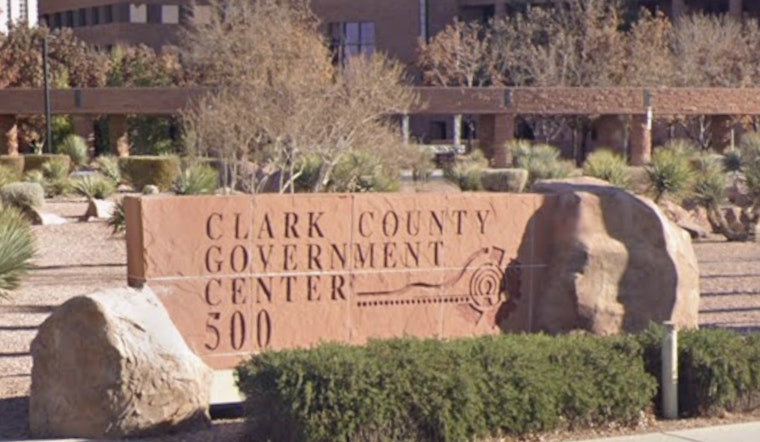
Clark County’s handling of a high-dollar construction probe is heading from the records office to a courtroom.
The Las Vegas Review‑Journal filed suit against Clark County on Thursday, asking a judge to force the release of internal investigation records tied to the county’s public‑works construction‑management unit. County officials have repeatedly denied the paper’s public‑records requests, labeling the files confidential personnel records. The lawsuit argues those documents are crucial to understanding how multimillion‑dollar public‑works contracts were awarded.
The complaint says Clark County acknowledged it is withholding a dozen interview records, a draft summary of those interviews and a confidential investigative summary, and that its refusal to release them amounts to seven violations of Nevada’s public‑records law, as reported by the Las Vegas Review‑Journal. The suit asks for an expedited court hearing, civil penalties for any willful violations of the Nevada Public Records Act and repayment of the paper’s costs. Attorneys for the paper say the county has treated investigative materials as off‑limits even though, in their view, the records go to the heart of the public’s right to know.
The lawsuit was filed by attorney Colleen McCarty on behalf of the Review‑Journal through the firm Ballard Spahr, which represents the paper in open‑records cases, according to Ballard Spahr. The filing asks a judge to order the release of the disputed documents and to impose penalties if the county is found to have willfully broken the law. The paper’s legal team argues that speed matters here because the records involve current county policies and previously reported contracting decisions that are still shaping how big projects get done.
The records at the center of the dispute tie back to earlier reporting on then‑Public Works construction‑management chief Jimmy Floyd, who was suspended and later fired last year after county investigations, and to work awarded to a team that included his wife’s company, Rock Solid Project Solutions. Prior Review‑Journal reporting found Rock Solid had been paid roughly $442,200 as a subcontractor on county jobs and stood to earn about $1.5 million on a 215 Beltway/Summerlin Parkway contract, background the paper says makes the investigative files squarely a matter of public interest, as detailed by the Review‑Journal. That coverage spurred an ethics complaint and prompted the county to adopt new disclosure and training requirements for employees overseeing contracts.
Legal Stakes and Nevada Public‑Records Law
Nevada’s public‑records law starts from the premise that government documents are open unless a statute explicitly makes them confidential. Agencies that refuse to release records must point to specific legal authority, and the law is supposed to be read liberally in favor of disclosure, according to The Reporters Committee guide to Nevada open‑government rules. Courts typically weigh privacy and personnel concerns against the public interest when records touch on alleged misconduct or contracting decisions. The Review‑Journal suit characterizes the county’s across‑the‑board withholding as an overreach, using personnel‑privacy exemptions to wall off scrutiny of a lucrative procurement process.
What Happens Next
The paper is asking the court for an expedited hearing. If a judge orders the records released, the documents could shed light on who evaluated proposals and how scores were assigned on the disputed contract. Clark County, for its part, can try to justify secrecy by leaning on employee‑privacy protections. If the court finds the county willfully violated the law, it could slap the county with civil penalties and require it to cover the paper’s legal costs.
Whichever way the judge rules, the case puts a closely watched local contracting controversy back under the microscope and will help define how far Nevada agencies can go in using personnel‑privacy claims to keep internal investigations under wraps. In the coming weeks, a court decision will determine whether taxpayers get a fuller view of how Clark County handled multimillion‑dollar public‑works work.




