

























































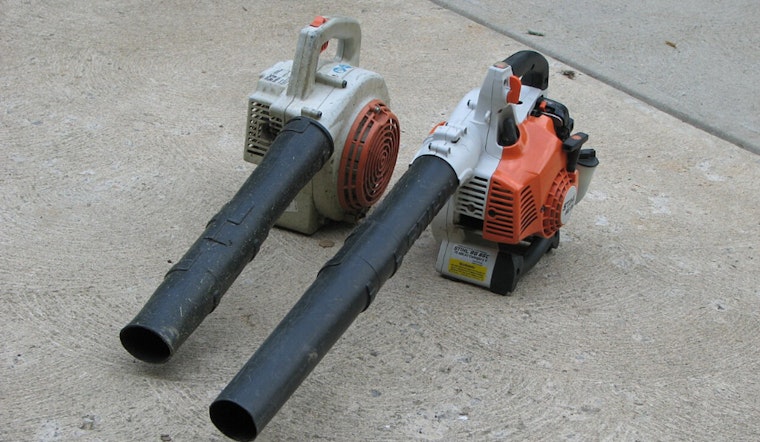
Gas-powered leaf blowers have officially had their last season in Lexington yards. As of March 15, 2026, residents are no longer allowed to fire up gas blowers on their own property, wrapping up a multi-year phaseout that started with a vote at a 2021 special town meeting and was later confirmed by referendum. Commercial landscapers lost their gas-blower exception a year earlier, on March 15, 2025, so the town has now closed the book on gasoline-powered leaf cleanup.
What the bylaw does
The bylaw targets two-cycle and other gas-powered leaf blowers, gradually pushing them out in favor of electric equipment while also clamping down on noise by limiting hours of use.
According to the Town of Lexington, residents may use non-gas landscaping gear on weekdays from 7 a.m. to 8 p.m., and on weekends and legal holidays from 9 a.m. to 5 p.m. Commercial crews have a tighter weekday window, 7 a.m. to 6 p.m., and may operate on Saturdays from 9 a.m. to 5 p.m. The rules also carve out an exemption for wheeled, walk-behind blowers on lots larger than one acre.
Enforcement and penalties
Lexington is not planning any Hollywood-style busts over leaf blowers. All complaints will be responded to in a non-emergency fashion, with no lights and no sirens,
the town says, and residents are instructed to call the non-emergency dispatch line while a violation is occurring.
The Police Department's code-enforcement officer will log incidents and focus first on explaining the rules rather than writing tickets. For anyone who keeps pushing their luck, though, the fines can add up. The bylaw allows penalties of up to $100 for a first violation, $200 for a second, and $300 for third and subsequent offenses, per the Town of Lexington.
Lawmakers and the cost question
On Beacon Hill, lawmakers are trying to smooth the financial hit for small landscaping outfits that need to replace gas equipment with battery-powered tools. Representative Michelle Ciccolo has filed House Bill H.3055, which would create a tax credit for electric landscaping equipment purchased by small yard-care businesses, according to the Massachusetts Legislature.
The idea is to help smaller operators afford electric mowers, blowers, and other zero-emission gear at a time when local bans are tightening around gas units. Industry voices in meetings and local coverage have flagged that electric tools can cost more up front and still tend to be slower on heavy, wet leaves, concerns that have been documented by the Lexington Observer.
Neighboring towns are doing the same
Lexington is not out on a limb here. Around the region, towns are rolling out their own versions of the gas-blower goodbye.
Arlington entered the final phase of its leaf blower rules on March 15, 2026, and Cambridge and other communities have adopted similar timetables. According to the Town of Arlington and Cambridge's published ordinance, these policies typically use multi-year transitions so landscapers have time to convert their fleets.
Island communities have joined in too. Towns on Martha's Vineyard approved phased gas-blower bans in 2025, according to the Martha's Vineyard Times.
What residents should know
For Lexington residents, the marching orders are simple: use electric equipment for yard work and keep an eye on the clock. If you spot what looks like a violation, the town would much rather you call the non-emergency police line than argue with a landscaping crew in the driveway.
Officials emphasize that enforcement will lean on education and warnings at first, and that logged complaints help them track repeat problems over time. With the bylaw now fully in effect, Lexington has officially wrapped up a long-running debate over blower noise and air quality, and attention is shifting to how tax credits or rebates might help smaller landscaping businesses keep up with the new rules.





