

























































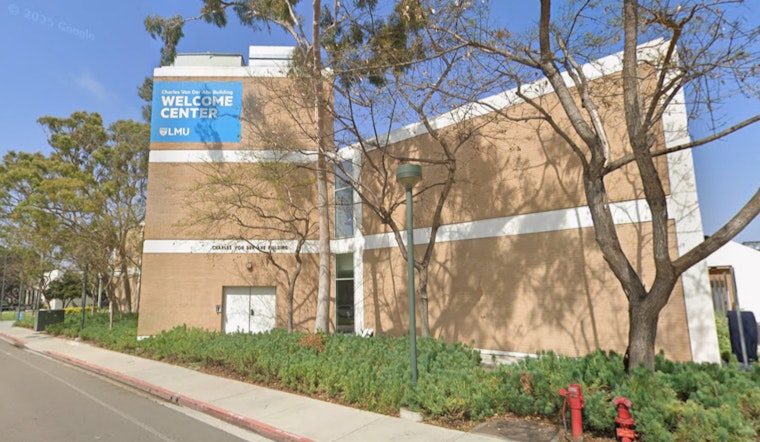
Non-tenure-track instructors at Loyola Marymount University took their contract fight straight to a board member this week, marching across the Westchester campus to the office of Fr. Eddie Siebert and handing him a petition that organizers say carries more than 500 signatures from faith leaders and community members demanding a return to bargaining.
After delivering the petition on Tuesday, the delegation of faculty, students and outside supporters moved on to a town-hall meeting hosted by LMU’s provost. The protest marks the latest flare-up in a labor dispute that has simmered since the faculty union was certified last summer and then abruptly frozen out of negotiations.
In September, LMU’s board announced it would no longer recognize the SEIU-represented non-tenure-track faculty, invoking a religious exemption to federal labor jurisdiction, according to the Los Angeles Times. The move triggered protests and accusations of union-busting and has since become a flashpoint on campus and in higher-ed labor circles.
The faculty unit had previously won National Labor Relations Board certification after an overwhelming vote last June, according to the university’s provost office, with contract talks running for roughly 10 months before LMU cut them off, Inside Higher Ed reported.
According to SEIU Local 721, Tuesday’s delegation included representatives from the Catholic Labor Network and other faith allies, who joined faculty in delivering the petition before heading to the nearby town hall. “The community has given you its feedback,” LMU instructor and bargaining team member Bryan Wisch told Siebert, in remarks published by SEIU.
Why LMU Says It Stopped Bargaining
University leaders have framed their decision as both legally protected and financially necessary. LMU has argued that the union’s economic proposals would have forced the school to choose between steep tuition hikes and cuts to academic programs, language the administration has used in its public communications.
At the same time, officials say they intend to pursue targeted pay increases and more full-time opportunities for non-tenure-track instructors, but through existing faculty governance channels rather than union bargaining, according to LMU communications.
What Comes Next
Union organizers say they are not going anywhere. They describe a strategy centered on faith-based outreach, petitions and growing pressure from students and campus groups. SEIU Local 721 says more than 30 student organizations have formally called on LMU to return to the bargaining table, and that both legal action and public-pressure campaigns remain in play.
Legal Implications
Legal analysts have pointed out that when a university claims a religious exemption, it can complicate National Labor Relations Board remedies and make enforcement less predictable, a dynamic examined by Inside Higher Ed.
Even so, union leaders say they plan to press unfair-labor-practice charges and keep organizing campus allies, ensuring the conflict stays active whether or not federal action ultimately gains traction, as reporting in the Los Angeles Times shows.





