

























































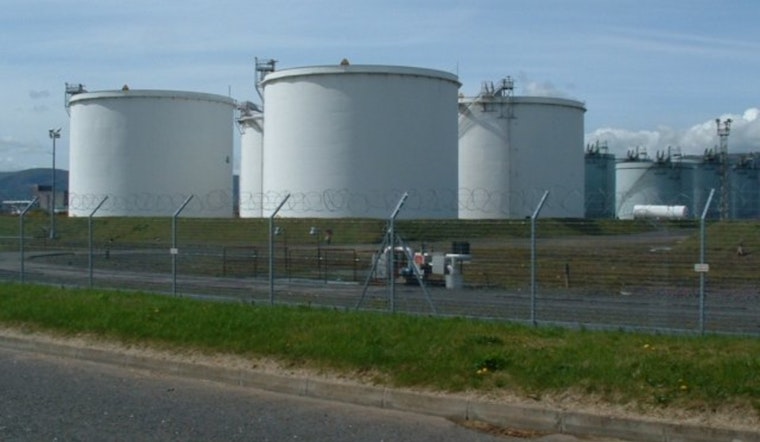
Long Beach has signed off on a plan to squeeze two more crude-oil storage tanks into the Ribost (World Oil) terminal at the Port of Long Beach, bumping the site from seven tanks to nine and pushing on-site capacity past 23 million gallons. The city finalized the approval in November 2024, and the backlash was immediate, with environmental-justice advocates and nearby residents warning the expansion will pile new pollution and safety risks onto communities that already feel overburdened. Community groups have filed legal challenges and, according to advocates, plan to take their fight to court on March 9, 2026.
What the project would do
The Ribost Terminal proposal calls for two new internal-floating-roof tanks, each rated at 25,000 barrels, to be added to the existing facility. Two older, underused tanks would be repurposed and leased out to third parties. Port records show the terminal currently operates seven tanks with about 502,000 barrels of capacity. The new permits would lift the total tank count to nine and tack on roughly 50,000 barrels of storage, a change port staff concluded would not require new pipelines or increase overall throughput. As outlined in the Port of Long Beach CEQA filing, the work is concentrated at Pier C in the harbor.
Health and safety concerns
Public health advocates note that large storage tanks routinely emit volatile organic compounds, including benzene and toluene, and can generate oily sludge that concentrates heavy metals, according to a peer-reviewed study of refinery tank farms. They also point out that tank farms are prone to spills, fires, and accidental releases that can threaten nearby neighborhoods. Regional air monitoring has documented elevated air-toxic cancer risk in Wilmington, Carson, and West Long Beach compared with the basin-wide average, a pattern the South Coast AQMD tracks in its MATES studies.
Community groups sue
Communities for a Better Environment, represented by Earthjustice, has filed a CEQA lawsuit after the City Council rejected an administrative appeal. The petition argues that the Final EIR downplays cumulative harms and skips over feasible alternatives. As reported by Earthjustice, residents are scheduled to press their challenge in court on March 9, 2026. A Los Angeles Superior Court tentative ruling from May 2025 shows the litigation is very much alive, with the judge overruling a demurrer and allowing the case to move ahead.
City and company response
City officials and World Oil are standing by the project. They point to the Final EIR and staff findings that no significant environmental impacts were identified under CEQA. World Oil has told reporters the expansion will improve terminal efficiency and support local jobs while the company explores the option of storing lower-carbon fuels in the future, a position it outlined in a company press release. The City Council transcript captures members urging residents to trust the CEQA process, and it also shows the council limiting testimony at the hearing to personal comments rather than broader critiques.
What comes next
As the lawsuit moves forward, petitioners are asking the court to throw out the city’s EIR certification and could pursue an injunction that would put construction on hold. Whether the judge orders a revised EIR, grants an injunction, or lets the project proceed as approved, the ruling will be closely watched by frontline communities and policymakers at a moment when California is weighing new limits on fossil-fuel infrastructure.





