

























































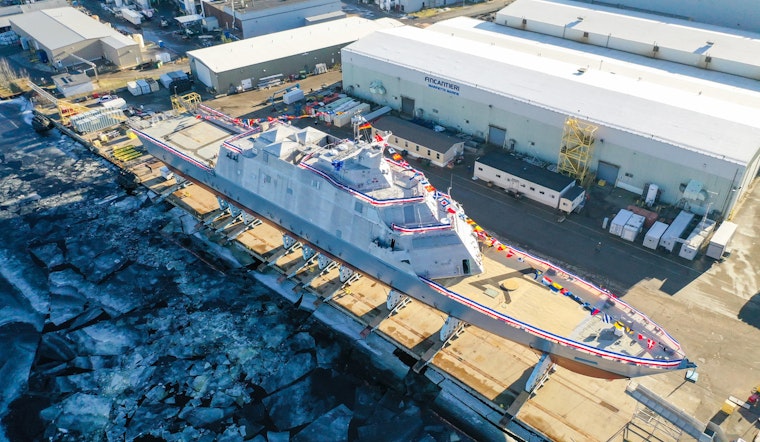
Fincantieri, the Italian shipbuilder that owns the Marinette yard in Wisconsin, says it is well positioned to scoop up more U.S. Navy work after the service reshuffled a major frigate program. Company leaders told reporters they can pivot from frigates to everything from corvettes and unmanned vessels to icebreakers and cable-laying ships as the Navy signals a move toward lighter, faster small combatants. That pitch lands just as Marinette looks to replace lost hulls and steady work at yards that had been gearing up for a longer frigate run.
Fincantieri says it can scale into new roles
George Moutafis, CEO of Fincantieri Marine Group, told Defense News that "We are ready to take on complex shipbuilding," adding that the firm is closely watching the Navy's plans for a Small Surface Combatant segment that could reach more than 70 vessels. The Defense News interview also notes Fincantieri was ramping up Constellation-class production at its Wisconsin yard before that program was curtailed. Moutafis said the company views newly ordered landing vessels as a way to keep serial production moving while it tracks how the Navy's "Golden Fleet" mix develops.
Navy puts a Vessel Construction Manager in charge
In February the Navy issued a Request for Proposal for a Vessel Construction Manager to oversee the Medium Landing Ship (LSM) program, a setup intended to speed delivery and spread work across yards, according to a Navy press release. The release states that Bollinger Shipyards and Fincantieri Marinette Marine will be the initial production sites and that Fincantieri will execute work to build four ships. Navy officials described the VCM as a single prime that will manage subcontracts and take responsibility for design-to-delivery performance, with a contract award expected around mid-2026.
Constellation trimmed; FF(X) pushed forward
Last November the Navy scaled back the Constellation-class frigate effort, keeping work on the first two hulls while canceling follow-on orders and shifting toward a new FF(X) design based on HII's National Security Cutter, congressional analyses show. The move was framed as a way to get more hulls into the water faster after years of design changes and schedule delays on the FREMM-derived Constellation. Defense and industry sources say the service is emphasizing producibility and parallel construction across more yards.
What it means for Marinette's workforce
Fincantieri has pointed to roughly $800 million invested in U.S. facilities and a Wisconsin workforce of about 3,000, according to the company's own release, and executives say their first priority is stabilizing the yards and squeezing as much as possible out of the landing-ship work now on the books. Local reporting after the Constellation change flagged political concern in Wisconsin and company statements that other orders, including amphibious, icebreaking and special-mission ships, could fill gaps, according to WBAY. Marinette officials and lawmakers will be watching the VCM competition and any follow-on small surface combatant awards closely for clues about long-term workload.
What to watch next
The near-term hinge is the VCM award and whether the Navy's "build-to-print" approach and VCM buffer actually speed serial production; the Navy press release says the service expects the VCM to cut technical and schedule risk while managing production across multiple shipyards. A successful VCM model could open bids for yards like Marinette on follow-on LSMs, corvettes or large unmanned vessels, or leave the yard fighting for work in a tougher small-combatant market. Expect further moves on FF(X) design and funding over the coming months, with the VCM selection pacing how quickly that work could show up in Wisconsin.




_before_its_christening_at_Marinette_Marine,_Wisconsin_(USA),_on_15_December_2018_(181215-N-N0101-115).JPG)