

























































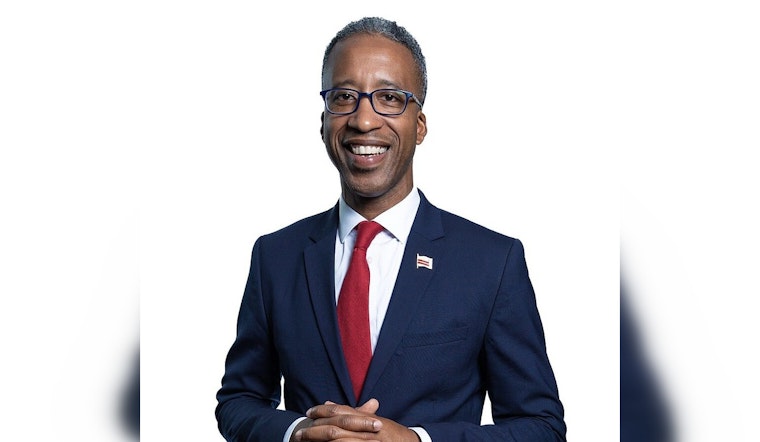
Kenyan McDuffie spent a fresh round of interviews casting himself as the pragmatic foil to Council member Janeese Lewis George, saying he would slash red tape to speed up housing construction, roll back what he calls "predatory" speed cameras and look at property tax relief. The former council member again leaned on baby bonds as a centerpiece of his affordability message and argued that his agenda is more likely to get done than sweeping promises. The back and forth is sharpening an already high-stakes Democratic primary that voters will settle this summer.
McDuffie ran through many of these ideas on the "Dream City" podcast and in an exclusive interview that surfaced this week. As reported by Axios, he said, "If it's not about safety, the cameras are gonna come down," accusing his chief rival of offering "empty promises" and following a "New York City playbook." The episode is available on the usual "Dream City" podcast pages and feeds.
Baby Bonds, Budget Choices And A Practical Pitch
McDuffie reiterated support for baby bonds, trust accounts seeded for children from low-income households, describing an approach that would contribute roughly $1,000 a year until beneficiaries turn 18. The proposal has become a signature plank of his affordability push, even though Mayor Muriel Bowser's FY26 budget left the program unfunded, a move local reporting said frustrated McDuffie and other backers. As outlined by The Washington Post, that omission has kicked off a political argument over how to finance large new programs while still keeping the city's books balanced.
Traffic Cameras, Height Limits And Tech Bets
On the podcast McDuffie pressed for a series of specific policy tweaks. He vowed to take down cameras that feel like "gotchas," promised to cut permitting red tape so housing can get built faster and said the Height Act could be eased in certain corridors without a sweeping rewrite. He also voiced support for autonomous-vehicle testing and "robotaxis" as part of the city's transportation future. Those comments, along with his campaign's careful talk about a possible property tax freeze, were detailed in the Axios interview.
Where They Part Ways
Janeese Lewis George has answered with a wider, more progressive platform that includes universal child care, social-housing concepts and tougher limits on how local police coordinate with federal immigration authorities. That approach has helped her pull in major labor endorsements and energize a grassroots donor base. As reported by The Washington Post, the matchup is increasingly defined as a contest between McDuffie's incremental, market-friendly fixes and Lewis George's more expansive ambitions, framing the campaign as a debate over feasibility versus scope. Both camps are working to prove that their preferred playbook can actually move voters.
Money, Organization And The Calendar
The two front-runners are now watching the clock. The District's official calendar lists the primary for June 16, 2026, and the special election to fill McDuffie's at-large seat is set for the same day, according to the District of Columbia Board of Elections. Local reporting earlier in the cycle showed McDuffie posting a strong early fundraising haul, while Lewis George built rapid momentum from local donors and union support. Outside spending and sharp-edged messaging are already filling inboxes and the airwaves as both operations try to lock down turnout and field organization ahead of the June vote; Hoodline covered the interim council shakeup after McDuffie's departure from the council earlier this year.
However it ends, the contest is shaping up as a test of whether D.C. voters want narrower, quickly actionable fixes on costs and traffic, or broader programmatic shifts backed by unions and grassroots organizers. Between now and June, expect more skirmishes over budgets, policing and which candidate can actually deliver relief in a city facing a tight fiscal reality.




