

























































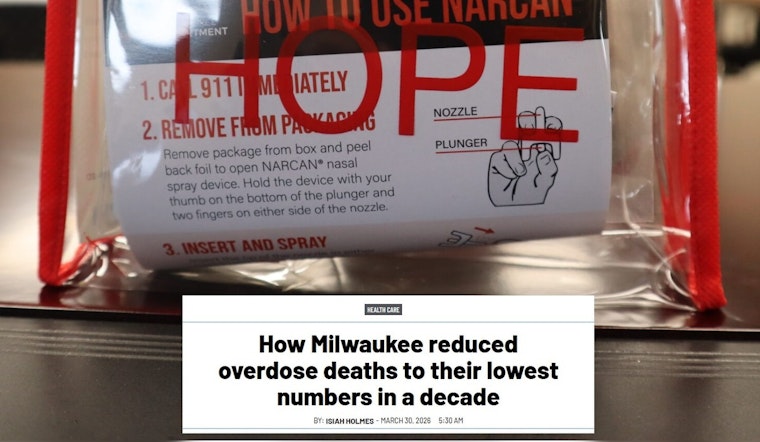
Milwaukee’s fire department says the city’s overdose crisis is finally starting to budge in the right direction, and it is giving a lot of the credit to a small team that shows up after the sirens stop. The Milwaukee Overdose Response Initiative, known as MORI, pairs community paramedics with peer support specialists who track down people after nonfatal overdoses and try to steer them toward treatment instead of another 911 call.
On March 31 the department spotlighted those results on social media, sharing program data and recent coverage, according to the Milwaukee Fire Department. The post cast MORI as a fire-department-led push to get more naloxone and fentanyl test strips into people’s hands and to offer immediate rides to treatment when someone said they were ready. Below is the post as shared by the department.
MORI's reach in 2024
The Milwaukee Fire Department’s 2024 Mobile Integrated Healthcare report lays out just how busy MORI has been. In 2024, the team made roughly 3,680 outreach attempts, reached 543 people who had survived overdoses and helped 106 of them enter treatment. Along the way they handed out 1,868 “Hope Kits,” which include harm-reduction supplies. The report also ties MORI and partner efforts to about a 30% drop in fatal overdoses in 2024 compared with 2023, and notes that clients averaged a 51% reduction in 911 calls after they engaged with the program, according to the Milwaukee Fire Department.
How the program started and operates
MORI launched in 2019 as a collaboration between the Milwaukee Fire Department, the Milwaukee Health Department and community partners that use 911 data to quickly flag recent overdose survivors for follow-up, per a city data snapshot. Early grants, including a NACCHO award and a $735,000 funding boost announced in 2019, helped the city build out mobile teams and a peer-support model that sends people with lived experience out alongside paramedics, as reported by FOX6.
County trends and the bigger picture
Those efforts are playing out against a shifting county and national backdrop. Milwaukee County’s Overdose Dashboard has been used to map hotspots and guide where teams deploy, and county reporting shows an overall decline in fatal overdoses as agencies tweak strategies, according to Milwaukee County. Nationally, provisional data from the CDC point to a large drop in overdose deaths in 2024, a trend public health experts connect to wider naloxone access, more treatment options and programs funded by opioid settlements, per the CDC.
Disparities remain
The gains, however, are not landing evenly. Local reporting that draws on county data shows Black Milwaukee residents made up about 42% of the county’s overdose deaths in 2024 and still face roughly double the overdose death rate of white residents, highlighting stubborn inequities in both prevention and treatment access, according to Spectrum News.
Funding and what’s next
The fire department says new opioid settlement dollars and grants have helped lock in MORI’s future, and the program added a third outreach vehicle in 2024 to reach more of the city, according to the department’s Mobile Integrated Healthcare report. Local coverage and planning documents suggest officials intend to keep ramping up harm-reduction distribution and data-driven outreach to try to hold on to the recent progress, as described in real-time overdose dashboard work.
The fire department stresses that this is not a finish line. Staff say MORI’s numbers are encouraging, but that long-term success will depend on continued investment, closing equity gaps and making it far easier for people to actually get treatment when they decide they want it.





