

























































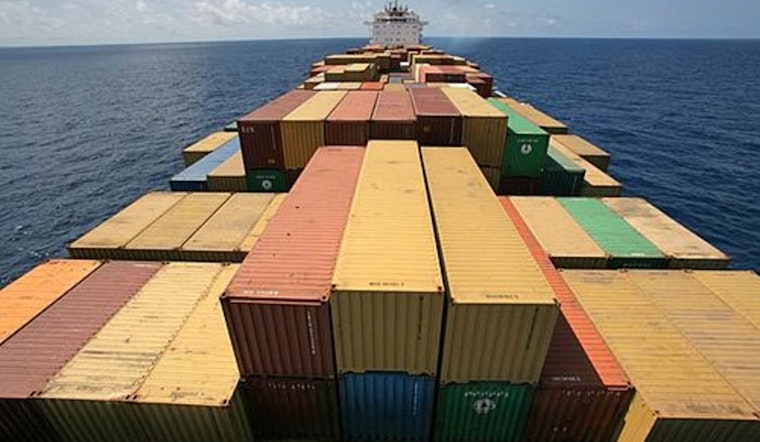
A towering OOCL mega-containership on its way to the Port of Long Beach ran into brutal North Pacific weather and left dozens of containers in the ocean behind it, officials say. Authorities report that 57 containers went overboard south of the Aleutian Islands on March 3, and the ship is slated for inspection in Long Beach on March 12. Because of rough conditions and safety concerns, the crew held off on a full damage survey at sea, so federal and port teams will not get the complete picture until the vessel is tied up at the dock.
Officials confirm 57 containers went overboard
The U.S. Coast Guard alerted the National Oceanic and Atmospheric Administration that the OOCL Sunflower had lost 57 containers while transiting south of the Aleutian Islands on March 3, according to NOAA. The agency says it is combing through the vessel’s cargo manifest to identify any hazardous materials and to shape potential environmental response plans.
In its initial notice, NOAA reported no visible discharges of material into the water and no known damage below the waterline. A full, close-up survey is on hold until the ship reaches port, when inspectors can safely examine the hull and the damaged stacks on deck.
The ship and its route
The OOCL Sunflower is one of the company’s newest ultra-large containerships, with a capacity of about 16,828 TEU and delivered in 2025, according to OOCL. The ship departed Kaohsiung on February 23 and has been deployed on the Ocean Alliance PSW6 transpacific rotation that links ports in Taiwan, China, and Vietnam with Long Beach, as reported by The Loadstar.
In addition to the 57 containers that went into the sea, notices indicate that an undisclosed number of boxes on deck were damaged or shifted during the same blast of heavy weather, leaving the final tally of lost and salvageable cargo to be determined once the ship is secured in port.
Long Beach readies for inspection
U.S. Coast Guard Sector Los Angeles-Long Beach is preparing to board and inspect the Sunflower when it arrives, and port teams are gearing up to evaluate whether any of the shifted containers pose a hazard or require recovery operations, according to The Maritime Executive. Early reports indicate the crew could not safely complete a final assessment while underway, so the in-port survey will drive decisions on any needed salvage work and potential operational delays.
Terminal operators typically have contingency plans ready for debris recovery and for handling ships that arrive with damaged cargo. How much the Sunflower incident disrupts the already busy Long Beach schedule will depend on what inspectors find when they finally get up on deck and into the stacks.
How common are container losses, and what is at stake?
Despite the dramatic images these incidents can conjure, container losses are still relatively rare. The World Shipping Council recorded 576 containers lost at sea in 2024, a figure that sits below the 10-year average but still keeps regulators focused on prevention, according to the World Shipping Council.
NOAA’s review of the Sunflower’s manifest will be key to determining whether any of the lost boxes held hazardous materials or bulk liquids that could harm marine life or nearby coastlines. At the same time, insurers, cargo owners, and terminal operators will be tracking how many consignments end up officially listed as lost or damaged and whether this mishap triggers any ripple-effect delays at the already high-traffic West Coast gateway.
No injuries have been reported, and the Sunflower is expected to reach Long Beach on March 12 for the scheduled survey, according to The Loadstar. Port and federal officials say they plan to release the results of the damage assessment once the inspection is complete.





