

























































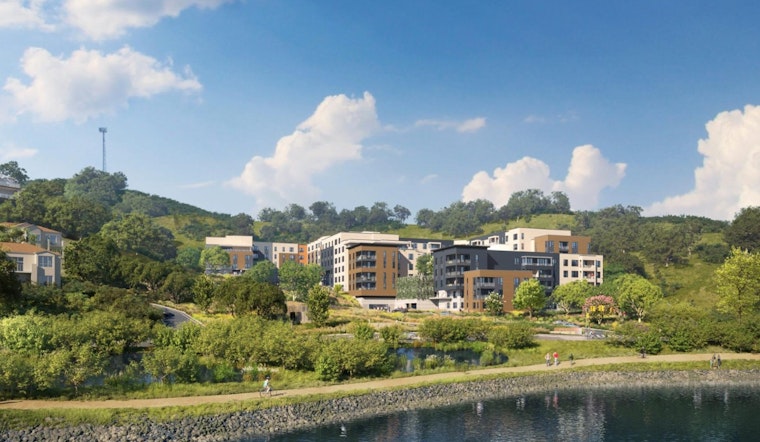
In one of Marin County's biggest bets yet on workforce housing, the long‑planned Oak Hill project near San Quentin would set aside 135 apartments for teachers, school staff, and county employees, alongside 115 affordable homes for lower‑income families. The two‑site complex would sit on state‑owned land along Sir Francis Drake Boulevard, not far from Larkspur Landing and major transit, a location backers say is tailor‑made to keep public workers living in the county instead of driving in from ever‑cheaper ZIP codes.
What Oak Hill Would Build
On paper, Oak Hill is really two communities next to each other: 135 workforce units for educators and county staff, plus 115 apartments reserved for extremely low‑ and low‑income households, according to the County of Marin. The county says the workforce piece would be owned and financed by the Marin County Public Financing Authority and developed by Education Housing Partners, while nonprofit builder Eden Housing would take on the lower‑income side.
Plans call for a mix of one‑, two‑, and three‑bedroom apartments to match different family sizes, with both halves of the project sharing the same bay‑front hillside setting.
Who Is Building It, and Who Would Live There
Nonprofits Eden Housing and Education Housing Partners are leading the build and say they are designing Oak Hill with sustainable features, terraced buildings, and shared amenities to fit the slope overlooking the bay, according to Eden Housing. Education Housing Partners’ model focuses on turnkey educator housing aimed at public‑sector employees working in Marin County, while Eden is maintaining an interest list and outreach effort to reach teachers and county staff who have repeatedly cited housing as a key reason they leave local jobs.
How the County Would Pay
To make the numbers work, Marin officials say they created a guarantor financing program to close a roughly $16.4 million gap that opened up as interest rates climbed. The Board of Supervisors accepted a staff report and signed on to the guarantor plan last year, the County of Marin reported.
Under the proposal, the county would act as guarantor for 34 of the workforce apartments to bring down borrowing costs. Participating school districts and other partners are expected to make parallel commitments of their own. County staff stress that any guarantor deal would be conditioned on an independent peer review intended to protect taxpayers from undue risk.
New Money and the Construction Timeline
Oak Hill also picked up a small federal earmark as part of a $3.1 million package of Washington funding for Marin projects, with construction currently projected to start in 2026 and finish a couple of years after that, according to SFGATE. In a separate video segment, KPIX Bay Area highlighted that 135 workforce apartments would be reserved for educators and county employees.
Developers and the Marin County Public Financing Authority plan to layer in tax‑exempt bonds and other public financing tools to close whatever funding gap remains before any dirt is turned.
Critics, Risk, and the Taxpayer Question
Not everyone is sold on the guarantor concept. Local watchdogs warn that if the project’s operating income falls short, the county’s backstop could ultimately land on taxpayers, an argument laid out in commentary covered by the Marin Post. Similar concerns surfaced when the county first weighed financial backing in 2025, with reporting that the project faced a funding shortfall that led to the guarantor idea in the first place, as detailed in funding shortfall coverage.
Supporters counter that the built‑in peer reviews and bond covenants are designed to cap the county’s exposure while finally delivering dedicated housing for hard‑to‑staff schools and county services.
What Comes Next
The Marin County Public Financing Authority, a joint powers authority formed by the County of Marin and the Marin County Office of Education, will handle bond financing and long‑term ownership as the state oversees entitlements and permitting, according to the Marin County Office of Education and project materials.
The Office of Education notes that interested employees can already sign up for the project’s interest list while developers finalize designs and financing. County officials say they expect key financing agreements and permit work to advance this year, with a target of breaking ground in 2026 and then phasing in move‑ins as the buildings are completed.





