

























































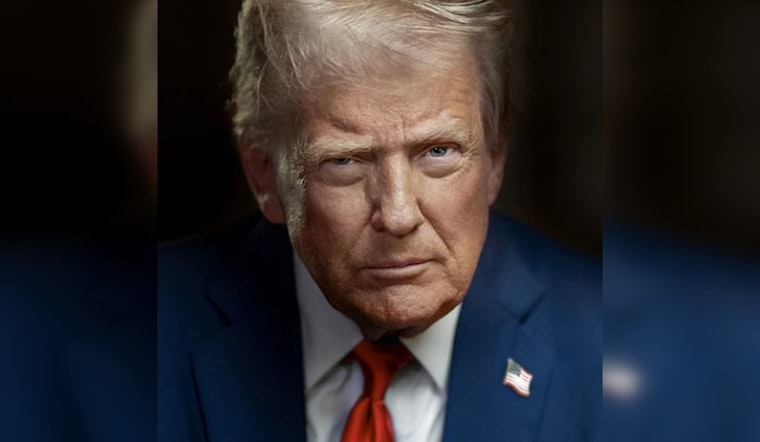
The World Anti-Doping Agency is weighing a rule change that could bar U.S. government representatives, all the way up to President Donald Trump, from holding official roles at the Los Angeles 2028 Olympics, with possible ripple effects for World Cup matches on U.S. soil in 2026. The idea lands as part of a prolonged standoff sparked when Washington stopped paying its annual WADA dues, and it is scheduled for discussion at an executive committee meeting on March 17, 2026.
Proposal lands on WADA’s agenda
According to The Associated Press, a draft on the executive committee’s agenda targets governments that have not paid their contributions by Jan. 31 of the year after they are billed. The text sketches out a three-tier system of sanctions that, at its toughest level, could exclude “government representatives” from participation at major events while keeping athletes’ rights to compete intact. The document notes that the United States is behind by a sum in the mid-millions and says any final rule would still need a sign-off from the Foundation Board, even as WADA has told European authorities that the measure could be advanced without undue delay.
Why Washington hasn’t paid
The U.S. dispute with WADA traces back to criticism of the agency’s handling of a 2021 case involving 23 Chinese swimmers and to bipartisan calls in Washington for an independent audit and governance reforms. In a public statement, USADA said withholding the payment was intended to force transparency and protect athletes’ rights. Congress backed that line by inserting audit language into an appropriations measure, a move that has effectively held back roughly $3.6–$3.9 million in annual dues, according to reporting.
WADA pushes back
WADA has pushed back on the criticism, defending both its finances and its governance. The agency argues that conditioning contributions on political demands would set a dangerous precedent for the global anti-doping system and points out that other public authorities have stepped in to help soften the shortfall. The Guardian has reported that WADA is highlighting its routine audits and citing Article 6.6 of its statutes, which already limits board participation for governments that do not pay, as part of its case. So far, that stance has done little to quiet U.S. demands for independent oversight.
What it would mean for LA and the World Cup
If adopted, the practical impact around the LA Games and the 2026 World Cup would likely be more political theater than operational meltdown. The draft focuses on public authority officials and could block government representatives from certain ceremonial or delegation roles, while leaving athletes free to compete. Responding to coverage of the proposal, WADA called the reporting from the Associated Press “entirely misleading” and stressed that any change would not apply retroactively. U.S. officials, for their part, argue that the idea is unrealistic and tough to enforce. As one former ONDCP director put it to reporters, "I have never heard of a $50-million-budget Swiss foundation being able to enforce a rule to, for example, prevent the United States president from going anywhere." The Associated Press
What's next
WADA’s executive committee is set to take up the proposal on March 17, 2026, and any formal rule change would still require broader approval or an extraordinary procedure by the Foundation Board. For now, the dispute looks as much like a governance and leverage fight as a straightforward sports-access issue, and federations, U.S. agencies, and athletes’ groups are likely to press for clearer answers once the committee has met. Expect some careful diplomatic outreach and a flurry of statements before any of this translates into a real-world limit on who actually walks into a stadium.





.jpg)