

























































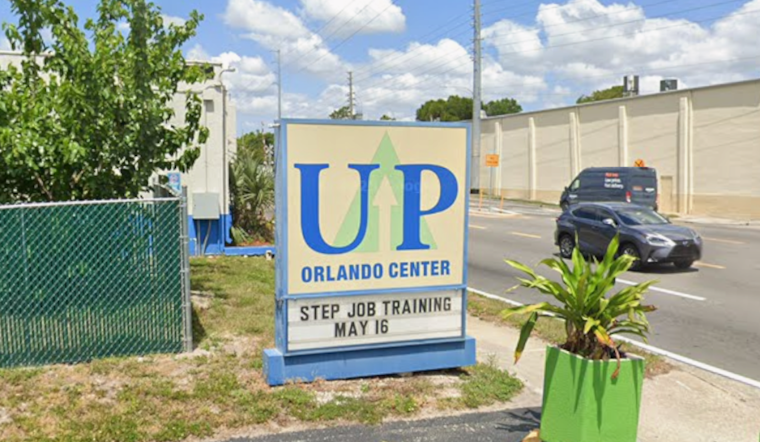
Orange County commissioners on Tuesday signed off on roughly $39 million in federal grants that will supercharge two major safety-net projects in Orlando. The package sends $15 million to the Coalition for the Homeless of Central Florida to build a new shelter for women and children, and another $15 million to United Against Poverty to replace and enlarge its storm-battered emergency food pantry in the SoDo neighborhood. County officials and nonprofit leaders say the cash infusion will speed up construction plans and stabilize services for seniors, children, and survivors of domestic violence who are already straining the system.
According to the Orlando Sentinel, the board's recommendations include about $32.7 million from community development block grant disaster recovery funds for public facilities, a roughly $6.17 million set-aside to repair storm-damaged affordable housing and develop supportive units, and smaller awards for environmental resilience and small-business incubation. The move drew support from Rep. Maxwell Frost and other officials who pushed to steer federal resources into local housing and hunger relief projects.
What the money will pay for
The dollars are concentrated on brick-and-mortar work and public-facility upgrades in low and moderate-income neighborhoods, from rebuilding food-distribution infrastructure to modernizing shelter space and adding supportive services. The package also includes $150,000 for a countywide strategy to expand the urban tree canopy and bolster environmental resilience, and about $450,000 to upgrade Eatonville's community redevelopment agency building into an economic development and small-business incubator. These priorities line up with Orange County’s housing and recovery planning, according to Orange County’s Annual Action Plan.
United Against Poverty's rebuild and demand spike
United Against Poverty says its UP Centers now serve tens of thousands of households, with more than 56,000 unique households listed across its centers, according to United Against Poverty. The nonprofit's emergency pantry at 150 W. Michigan Street took a hit from a heavy summer storm in 2024 that damaged the roof and forced partial closures while repairs were underway, as reported by Orlando Weekly. County and nonprofit figures showed roughly a 30% year-over-year jump in client need in 2025, and a United Against Poverty spokesperson told reporters the current facility will stay open until a new building is finished, according to the Orlando Sentinel.
Coalition for the Homeless gets $15M
The Coalition for the Homeless of Central Florida plans to use its $15 million award to build a new shelter for women and children and add bridge-housing units at its downtown campus, officials said. The nonprofit has been working on a campus redevelopment to expand capacity and services, a project it says is meant to shorten stays and help families move to permanent housing more quickly, according to Coalition for the Homeless of Central Florida. Martha Are, chief executive officer of the Homeless Services Network of Central Florida, called the award "much-needed" and noted that children make up nearly one-fifth of the region’s homeless population, underscoring the urgency for family-focused shelter beds, per the Homeless Services Network of Central Florida.
What comes next
County staff will now work with the nonprofits to finalize contract terms and push the projects into design and permitting phases. Construction timelines will vary by site and funding schedules, and no one is pretending this is an overnight fix.
Officials stress that while these awards are expected to shore up short-term gaps in services, long-term housing stability will still hinge on continued investment in affordable units, rental assistance, and case management. Leaders at the Coalition and United Against Poverty say rebuilding and expanding services will take time, but will be crucial as demand for food and shelter keeps climbing across Central Florida. For now, the county's decision delivers a concentrated burst of federal money intended to turn plans into concrete, with the hope it translates into more beds, more meals, and more stability for families in crisis.





