

























































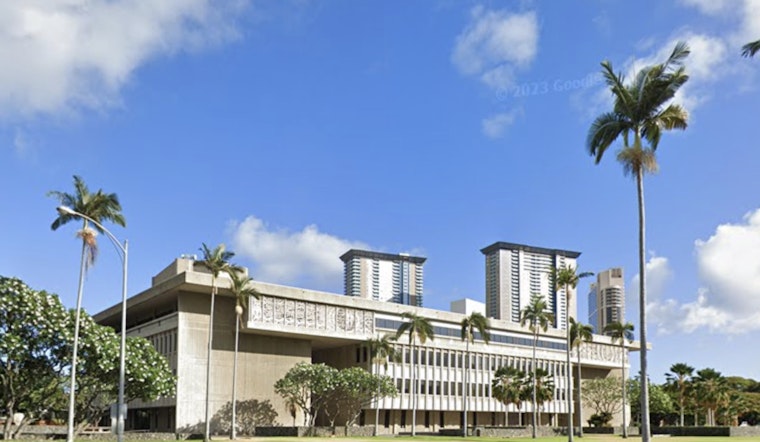
At the state Capitol, lawmakers are staring down a deceptively simple question: how tightly should Hawaii's government hold the reins on a Native Hawaiian advisory group that was built on trust, relationships and generational knowledge?
On one side are legislators who say tighter oversight of the Hawaii State Aha Moku Advisory Committee will finally bring transparency and accountability. On the other are Aha Moku leaders and cultural practitioners who warn that formal controls could scare people away and hollow out a community-driven system that was never meant to look like a standard state board.
That tension is now wrapped up in a single bill that could reshape how Native Hawaiian voices reach the state officials who control land, water and leases.
What The Bill Would Do
House Bill 2047, introduced by Rep. Mahina Poepoe, would put the Department of Land and Natural Resources chair squarely in charge of the Aha Moku's top staffer. The chair would appoint, evaluate and, if necessary, remove the executive director, with annual performance reviews built into the job.
The bill would also require the committee to take formal positions and issue recommendations only at public meetings that are properly noticed, with tighter rules for how those decisions are documented. Reporting would get beefed up too, calling for more detailed annual reports and an itemized breakdown of expenditures. The House committee handling the measure passed it with amendments and sent it to the Senate earlier this month, according to LegiScan.
An Advisory Group With A Thin Paper Trail
The Legislature created the Aha Moku in 2012 to pull place-based Native Hawaiian knowledge into state decisions on everything from water use to land leases and permits. On paper, it is a conduit between island communities and the agencies that manage natural resources.
In practice, its public record is sparse. The official "Meetings and Minutes" page for the Hawaii State Aha Moku shows agendas and minutes only through 2014, and annual reports have been filed inconsistently. That gap between what the law envisioned and what the public can actually see has pushed lawmakers to ask for clearer rules, according to the Aha Moku site maintained by DLNR.
Leaders Warn The Change Could Erode Trust
Aha Moku leaders and cultural practitioners told reporters they worry HB 2047 would drag a cultural process deeper into politics and make some island representatives think twice about showing up. Several say the committee’s strength comes from kupuna and lineal practitioners who are willing to share knowledge precisely because they are not reporting to a traditional state boss.
"If the executive director has to answer to DLNR, people will refuse to participate in the process," one leader said in an interview cited by Civil Beat. Supporters of the bill counter that public meetings and clearer oversight are meant to make the program more accessible and understandable to both communities and lawmakers, not to shut anyone out.
Money And Access
On the budget sheets, the Aha Moku Advisory Committee looks reasonably supported. State budget documents show roughly $286,300 a year allocated to the program. On the ground, members say it feels very different.
"They pay their travel expenses out of pocket," Aha Moku Chair Rocky Kaluhiwa told Civil Beat, adding that reimbursements can be slow or never show up at all. Backers of HB 2047 argue that stricter oversight and more detailed reporting would help ensure those funds are actually spent and tracked in ways lawmakers and the public can follow, as laid out in DLNR budget materials.
Where Aha Moku Has Weighed In
When the Aha Moku does plug into state decision-making, its voice has carried weight. Representatives backed the removal of the Kahiliwai reservoir in Anahola and have advised the Board of Land and Natural Resources on issues that include aquarium-fishery rules and military land-lease reviews.
A 2025 report to the Legislature details those recommendations and the board actions that followed, showing that an engaged Aha Moku can help steer major state calls. According to the committee’s own report to the Legislature, it continues to work with island councils to surface local concerns and bring them into the formal process.
Legal Implications
If lawmakers pass HB 2047, the DLNR chair would gain centralized authority over hiring and oversight of the Aha Moku executive director, and the committee would have to adopt its formal advisory actions in public, noticed meetings.
The shift is intended to line the committee up with Hawaii's open-meetings and budgeting rules. Critics say concentrating that kind of administrative power could make participants less likely to speak freely. The bill text and committee report outline those proposed changes, according to LegiScan.
From here, the measure heads to the Senate, where hearings and possible amendments will decide whether lawmakers lean harder into oversight or preserve more independence for a system built on generational knowledge. Whichever way it breaks, the outcome will help define how Hawaii balances public accountability with the cultural relationships that give the Aha Moku its meaning.





