

























































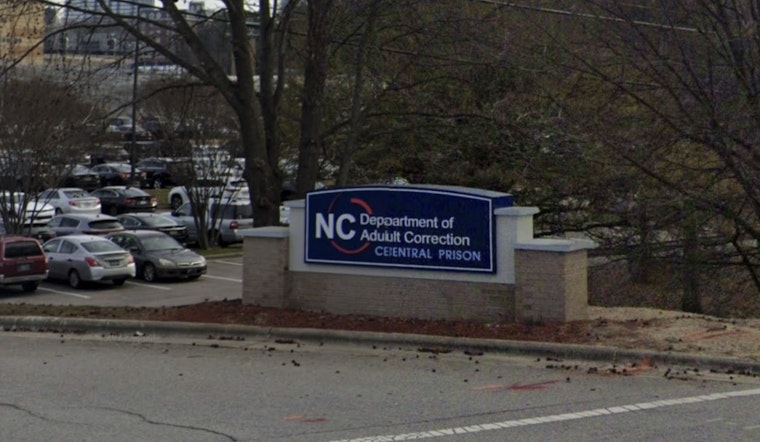
A brutal 2020 beating inside Raleigh’s Central Prison is headed back to court after a federal appeals panel revived a civil rights lawsuit that a lower court had shut down. The inmate says officers failed to protect him from an attack that fractured his face in multiple places and led to reconstructive surgery. Now the state prison system may have to explain in open court how it enforces its own rules about keeping “safekeepers” away from the general prison population.
In a February 17 decision, the U.S. Court of Appeals for the Fourth Circuit vacated the district court’s summary judgment ruling and sent the case back for further proceedings, finding that “genuine disputes of material fact” remain, according to the Fourth Circuit. Judge Nicole Berner wrote the majority opinion, joined by Judge Toby Heytens, while Judge Marvin Quattlebaum dissented. The ruling breathes new life into the inmate’s 42 U.S.C. § 1983 failure to protect claim against three correctional officers who were on duty the day of the attack.
The assault happened in January 2020 at Central Prison in Raleigh. The inmate, identified in court filings as Brandon Case, walked through open sallyport doors and was “struck repeatedly in his face” by a safekeeper, according to Charlotte Alerts News. He was rushed for emergency medical care and underwent reconstructive surgery that the local outlet reports left him permanently disfigured and living with chronic pain. Three days after the attack, a supervisor circulated a memo warning staff that safekeepers and general population inmates had “come in contact too many times,” the report states.
How the court saw the officers' role
Writing for the panel, Judge Berner said the officers “failed to take reasonable action” to keep safekeepers apart from general population prisoners and noted that once officers learned the safekeepers were returning, they “quite literally only needed to lift a finger” to close the sallyport doors, according to the Fourth Circuit. The court highlighted evidence that officers left the double sallyport doors open to avoid having to repeatedly open and close them, even though radio traffic warned staff that the safekeepers were on their way back through the area. Taken together, the opinion said, those facts create a triable question about deliberate indifference under the Eighth Amendment.
Back to court for a trial
The appeals court vacated the district court’s 2024 summary judgment ruling and remanded the case because “genuine disputes of material fact remain” about both the officers’ liability and whether they are entitled to qualified immunity, WBT reported. The district judge had previously concluded there was not enough evidence to support a constitutional violation. The appellate panel, however, said a reasonable jury could find that the officers knew about and disregarded a substantial risk to Case’s safety. On remand, the lower court will decide what evidence a jury gets to hear and whether the officers’ conduct violated clearly established law at the time.
Legal implications
Legal observers say the ruling underscores the pleading hurdle prisoners face if they want their lawsuits to survive early dismissal: they must show both an objectively serious risk of harm and that staff were subjectively aware of that risk. The Fourth Circuit applied the framework from Farmer v. Brennan and leaned on precedent that the panel said made the relevant right “clearly established” for purposes of rejecting qualified immunity at this stage, an outcome lawyers highlighted in commentary for The Chetson Firm. If the case reaches a jury, jurors will have to sort out evidence on training, policies, and whether the officers’ conduct crossed the line into deliberate indifference rather than mere negligence.
What this means for prison safety
Central to the court’s analysis were the prison system’s own internal policies, which require safekeepers to be housed in restrictive housing and kept separate from general population inmates. The panel pointed to a post-attack memo warning that staff had grown “complacent,” an acknowledgment that separation rules were not being consistently followed. That type of on-the-ground lapse in enforcing separation policies is exactly the sort of operational failure that can support an Eighth Amendment claim, according to reporting from WBT. Prison officials have argued in other cases that mistakes or negligence do not always amount to constitutional violations, and this opinion leaves it to a factfinder to draw that line here.
Case’s appeal was brought by attorneys for the inmate, who is identified in filings as 37 years old and serving a murder sentence, while the officers are represented by the North Carolina Department of Justice, the filings show, according to Charlotte Alerts News. The lawsuit is now back in the Eastern District of North Carolina. No new trial date has been publicly posted, and the court will first have to sort out the remaining qualified immunity issues before deciding what questions, if any, go to a jury.





