

























































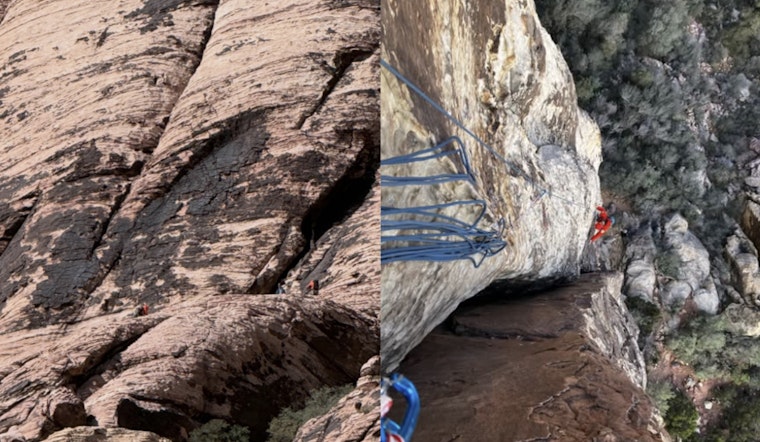
Two separate climbing epics at Red Rock Canyon turned into overnight rescue missions this weekend, keeping Las Vegas search-and-rescue teams on rope well past dark and into the early morning. Both parties were safely brought back to the ground, but the incidents were a sharp reminder of how fast a clean descent can unravel on the area’s sandstone walls.
According to a post on X from the Las Vegas Metropolitan Police Department, two SAR ground teams had to hike in, access both stranded groups, and guide everyone down with no reported injuries. One call came in around 8 p.m. Sunday, with a second rescue spinning up in the early hours of March 2. Windy conditions made an already technical situation tougher, limiting helicopter use and forcing rescuers to rely on ground-based rope systems. The department also flagged a familiar Red Rock headache for climbers: rappel ropes that get stuck at the worst possible time, a risk that increases when the wind starts howling, per LVMPD.
How the calls unfolded
Department logs show two distinct situations playing out on Red Rock’s multi-pitch routes. In one, a party’s rope became stuck on the descent, leaving them unable to continue their rappel. In the other, a climber strayed off the intended line, ended up higher than planned, and could not build a solid anchor to safely continue. Both incidents kicked off Sunday evening and required rescuers to rig technical rope systems, all while picking careful lines of approach in gusty conditions with limited air support. In its account, the department urged climbers to plan around fast-changing desert weather and to carry enough gear to comfortably wait out an unexpected night on the wall if things go sideways.
Why ropes get stuck
Stuck rappel ropes are a classic way an ordinary climb turns into a call for help. Hardware or webbing above a rappel, old bolts that are not part of the climbing route, or the rock itself can snag a strand, or a swinging rope can bite into a feature just out of reach. Once that happens, pulling the rope can be impossible without complex and risky improvisation. Accident reports compiled by the American Alpine Club repeatedly cite stuck ropes as a factor in after-dark epics, when climbers run out of safer options and eventually call 911. Route descriptions for Red Rock, along with the park’s own guidance, consistently emphasize the value of knowing the line, watching where the rope runs, and managing anchors carefully on the area’s friable sandstone. According to the BLM, those precautions help reduce the odds of a rescue.
How rescues are staged
When wind keeps helicopters on the ground, rescuers shift to classic high-angle systems that start from the rim. Teams build anchors high above the climb, then lower rescuers down to the stranded party, secure everyone, and either lower or raise the group to safety. It is slower than a quick hoist by air, but it is a proven strategy that keeps additional risk in check. LVMPD Search and Rescue uses a mix of commissioned officers and highly trained volunteer lead-climb teams who hone their skills in technical rope rescue, helicopter hoist work, and tactical medicine throughout the year. For more on how those missions are staffed and trained, the unit offers background on LVMPD Search and Rescue.
What climbers should remember
Local climbers are getting yet another reminder to pack for the descent, not just the send. That means carrying backup cord and webbing for improvised anchors, a reliable headlamp, extra warm layers, and some form of emergency shelter, especially when the forecast mentions wind. The region has seen several complicated calls in recent months, including a seven-hour rescue after a climber fell in Pine Creek, a case that shows how a casual afternoon at the crag can quietly stretch into an all-night operation. Coverage of that earlier incident is available from People.





