

























































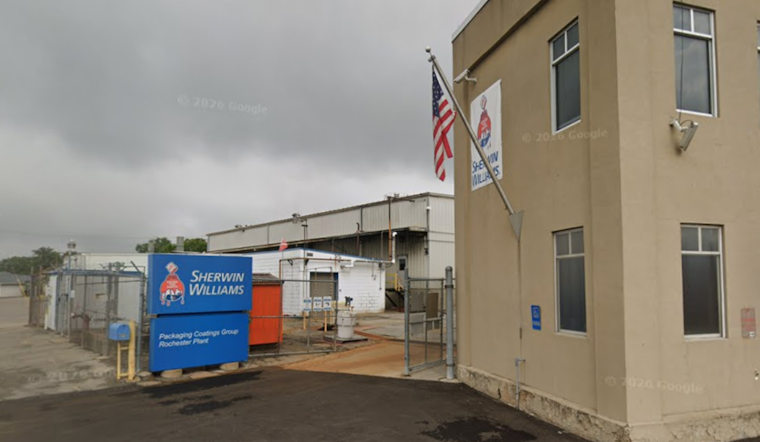
On a quiet stretch of Rochester in Beaver County, a sharp chemical odor has become an unwanted regular. Residents say the smell drifts through their neighborhood and into their homes, to the point where some families avoid opening windows or spending time outside. Many of them point to the Sherwin‑Williams coatings plant, just a short walk from nearby houses, as the likely culprit. One mother says the odor has gotten so intense that her son now sleeps in the hallway instead of his bedroom.
KDKA Investigates found that the Pennsylvania Department of Environmental Protection issued a violation to the Sherwin‑Williams Rochester plant at the end of January. According to the DEP, inspectors cited the facility for failing to install a required thermal oxidizer and for not performing mandatory stack testing on its scrubbers, controls meant to destroy and measure volatile organic compounds and hazardous air pollutants, as reported by CBS Pittsburgh.
"I just am not going to live in a house that I own and can't go outside and enjoy the air, open my windows," Rochester resident Kristina Warnick told CBS Pittsburgh. She said the odor is strongest in her son's downstairs bedroom, that an air purifier in her basement often shows poor air quality, and that a plumber and the fire department ruled out sewage leaks but did confirm a chemical smell inside. "At its worst, it smells like pure chemicals," she said.
Permit history and emissions data
The Sherwin‑Williams Rochester facility at 372 Cleveland Street has filed air‑plan approvals and modifications that reference a thermal oxidizer and other pollution controls, according to the Pennsylvania Bulletin. Facility‑level reporting compiled from EPA Toxics Release Inventory data shows the Rochester plant has reported releases of solvents and VOCs, including ethylbenzene, xylene, and formaldehyde, chemicals known for strong solvent‑like odors, per PERI.
Company response and what happens next
Sherwin‑Williams' public sustainability materials highlight a companywide Environmental, Health, and Safety program and a stated commitment to regulatory compliance and site‑level controls, according to Sherwin-Williams. Neighbors say they have reached out to state and federal regulators and are waiting for follow‑up as the DEP reviews the violation and decides whether additional testing or enforcement will be required.
Residents say they want clear timelines for testing and fixes, along with visible steps to deal with the odor. DEP permit records and plan approvals give regulators a way to require corrective work if the plant is found out of compliance; neighbors say they intend to watch closely to see whether that authority leads to changes that actually improve the air around their homes.




