

























































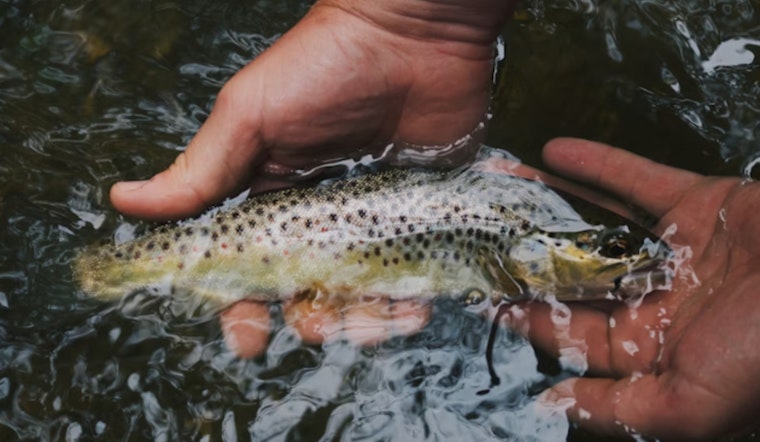
More than 6.2 million juvenile Chinook salmon have just been pushed out of a federal hatchery and into the Sacramento River, heading for the ocean through water that conservationists warn could be lethally low and too warm. Hatchery staff say their hands were tied because tanks are packed and keeping fish any longer would spike disease risk, setting up a grim tradeoff between immediate danger to young salmon and water managers’ drive to save cold water for the dry months still to come.
Crews with the U.S. Fish and Wildlife Service released the smolts from Coleman National Fish Hatchery this week, according to The Sacramento Bee. Golden State Salmon Association executive director Vance Staplin emailed the Bureau of Reclamation urging extra releases from Shasta Dam to help the fish, and told the paper he had not yet heard back. Advocates say there is only a brief window to tweak operations and lift survival odds for this particular wave of hatchery fish.
Science: how flow shapes survival
Researchers have been clear that how much water is in the river can matter more than many managers have planned for. A 2021 analysis that tracked juvenile Chinook with acoustic tags found survival rose sharply as flows increased. At flows below about 10,700 cubic feet per second, or cfs, only about 19% of the tagged fish made it through, while survival jumped to roughly 50% when flows ranged between about 10,700 and 22,900 cfs. That study, summarized in a 2021 report hosted by NOAA, has become a go to benchmark for deciding when to send short, sharp pulses of water down the system.
Where flows stand now
Reality on the river is well below that survival sweet spot. Flows below Wilkins Slough were about 7,780 cfs on Wednesday afternoon, roughly 38% under the 10,700 cfs benchmark, and water temperatures are already higher than biologists like to see for migrating smolts, according to The Sacramento Bee. The Bee also reports Lake Shasta storage at about 115% of average as of Tuesday and notes the Biden administration carved out roughly $20 million in 2024 to plan major repair and rehabilitation work at Coleman. It is a textbook Central Valley tension: plenty of water behind the dam, thin flows below it.
Hatchery squeeze and long term fixes
Coleman, which is run by the U.S. Fish and Wildlife Service, has finite tank space and aging water treatment systems. Staff say that when capacity is maxed out, they sometimes have to let fish go even when river conditions are less than ideal, because holding them longer ramps up disease risk inside the hatchery. On top of that, fisheries science has repeatedly found that hatchery origin salmon tend to have lower survival and reproductive success than their wild counterparts, a pattern summarized in the literature and highlighted in reporting by the Transactions of the American Fisheries Society. With major upgrades at Coleman still in design, managers are stuck juggling short term animal health concerns against slow moving infrastructure fixes.
What could help and what is next
Fishing groups and salmon advocates are pressing the Bureau of Reclamation to send more water out of Shasta now, at least enough to nudge flows toward that 10,700 cfs survival threshold identified in the tagging study. Water managers counter that they have to guard cold water pools for the hottest part of summer, when river temperatures can make or break entire salmon runs. Scientists say cooler, wetter weather in the forecast could improve conditions next week, but advocates warn that a friendlier forecast is no substitute for deliberate pulse flows. With tens of millions of hatchery fish already in the system and a tight travel window to reach the ocean, the next few weeks of dam operations and storm patterns will likely decide whether this cohort becomes a modest success or an expensive loss for both fisheries and the river ecosystem.





