

























































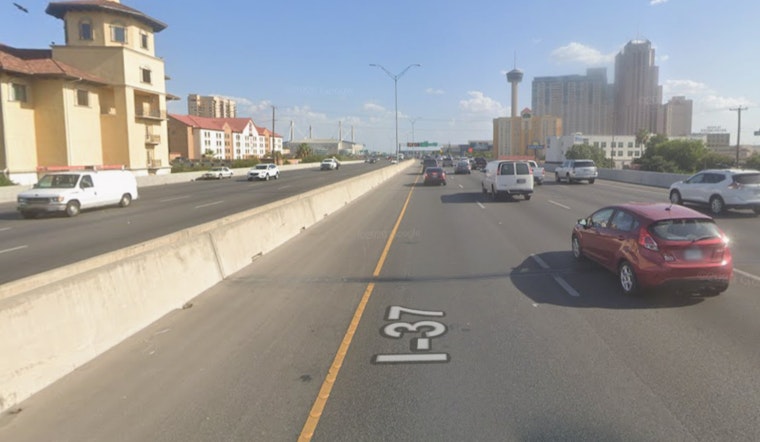
San Antonio is getting serious about healing one of its biggest concrete scars. On Thursday, city leaders signed off on a roughly $3.7 million planning contract to figure out how to better connect downtown with the East Side across Interstate 37. The federally backed study is powered by nearly $3 million in Neighborhood Access and Equity planning funds plus a $740,000 local match. It will zero in on the roughly two-mile stretch of I-37 from Houston Street to Carolina Street and is scheduled to kick off this month, with community outreach expected in April. The work could surface anything from better sidewalks and bike lanes to an engineered land bridge meant to pull neighborhoods back together decades after the freeway split them apart.
As reported by the San Antonio Report, City Council approved a planning contract with Dallas-based infrastructure giant AECOM Technical Services. The firm, known for work on projects such as One World Trade Center and the Mercedes-Benz Stadium, is expected to carry the contract through the end of the year. Council members pitched the study as a chance to make it less of an ordeal to walk or bike between Hemisfair, the convention center and the Alamodome.
Study Scope And City Goals
In its request for qualifications, the city brands the effort as "Improving Neighborhood Access Across 1-37" and calls for community-driven design options that deliver a "seamless urban experience." According to the City of San Antonio, the contract is capped at about $3.7 million. Consultants are tasked with leading extensive public engagement, developing multiple alternatives and testing how feasible they actually are.
The RFQ also revisits the corridor's history, pointing to 1930s redlining and the late-1960s construction of I-37 as a one-two punch that fractured street networks once tying the East Side to downtown. That historic context is meant to guide how any new designs try to reconnect what the highway helped pull apart.
Funding And Timeline
Most of the planning money comes from a U.S. Department of Transportation Neighborhood Access and Equity planning grant, with the city pitching in the required 20 percent local match through hotel occupancy tax revenue. As the San Antonio Report details, the federal award, first authorized in March 2024, covers almost $3 million of the overall study budget. The NAE program was created to help communities repair harms from highway construction and to back planning and construction projects that boost walkability and access, according to the U.S. Department of Transportation.
Where This Fits With Project Marvel
The study zone overlaps the footprint of the planned Project Marvel sports and entertainment district, where early concept drawings featured a dramatic land bridge reconnecting Hemisfair with the Alamodome side of I-37. Voters in Bexar County approved Project Marvel-related propositions on Nov. 4, 2025, clearing the way for pieces of the broader redevelopment to proceed, according to the San Antonio Express-News. City documents say the connector study could point to smaller, neighborhood-level fixes like upgraded crossings, as well as heavier engineering moves such as an overpass or land bridge.
That headline-grabbing land bridge in some renderings is not guaranteed to be the first thing built, or built at all. City Manager Erik Walsh told a CityFest panel that officials had stepped back from the land bridge concept because of uncertainty over federal support, leaving planners to focus on ideas that do not depend on a multi-million-dollar deck. Texas Public Radio reported that while a land bridge is still technically an option, the initial phase of work will likely emphasize lower-cost street-level improvements and safer crossings.
What DBE Changes Mean
Because federal dollars are in the mix, the city initially set Disadvantaged Business Enterprise goals for contracts on the study. Those numeric targets were later removed after legal challenges and federal policy shifts. The city's RFQ still requires compliance with DBE rules, but a 2025 legal development led DOT to drop race- and gender-based presumptions in DBE eligibility. As the National Law Review notes, the department has pivoted to an approach that requires firms to affirmatively demonstrate social and economic disadvantage.
That tweak could influence which local small businesses end up competing for subconsultant roles on the planning effort and on any future construction work that follows.
The next big milestone for the public will be the city's input sessions, expected to start in April. After that, AECOM will spend the rest of the year refining design options and cost estimates. The firm will lead outreach and feasibility analysis, a technical first step that city leaders say is meant to keep whatever solution emerges grounded in what nearby residents and businesses actually want. Neighbors can expect a series of meetings and materials laying out tradeoffs between relatively quick, lower-cost upgrades and more ambitious, higher-price designs.





