

























































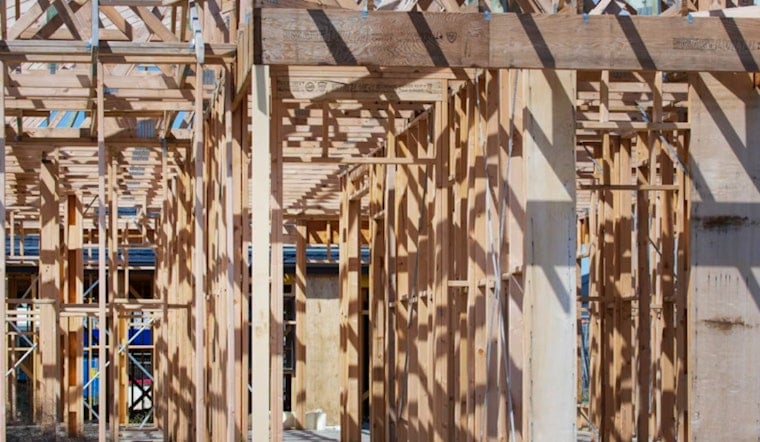
Wood framing is now poking above the fences just south of the Metro Expo/Bundy station in Sawtelle, where a trio of eight-story apartment buildings is climbing into place. The Carmel Partners complex is set to replace roughly 20 single-family homes and bring more than 600 new apartments across three blocks. With framing, cranes, and crews now in full view, the sites have clearly shifted from demolition and dirt work into full-on vertical construction.
As reported by Urbanize LA, the buildout calls for a 136-unit structure at 2201 S. Bundy Drive, plus two neighboring parcels at 2217–2233 and 2301–2319 S. Bundy Drive that will together add about 485 more units stacked above parking for roughly 462 vehicles. The projects are using Transit Oriented Communities incentives, and 69 of the apartments are slated to rent at the extremely low-income level for a 55-year term. Recent coverage from Urbanize also includes aerial shots showing the wood framing stretching along Bundy and Amherst Avenue.
Design And Scale
According to TCA Architects, which designed the complex, the three-building ensemble is branded as Carmel Bundy and totals 621 units and roughly 525,360 square feet of residential space, with a small amount of ground-floor retail in the mix. About 11 percent of the apartments are reserved for extremely low-income tenants, matching the figures in project materials, and the podium-style massing uses stepped upper floors to soften the apparent bulk from the street. Renderings highlight a curved corner at Bundy and Exposition that is intended to frame the station approach and make the walk to transit feel more connected and deliberate.
Why The City Allowed It
The projects are keyed to the city's Exposition Corridor Transit Neighborhood Plan, an overlay that channels new development toward Expo Line stations and rewrites zoning to favor transit-adjacent infill. Paired with California's Transit Oriented Communities program, the plan creates a path for taller, denser buildings in exchange for income-restricted housing and other public benefits. City planners have argued that steering new homes to transit corridors cuts vehicle miles traveled and helps build out more walkable, pedestrian-friendly streetscapes.
Affordable Units And Parking
Using TOC incentives, the developer stretched the overall unit count while committing to a relatively deep affordability slice: roughly 69 apartments are designated for extremely low-income households for 55 years, consistent with the 11 percent set-aside cited in filings. The two larger buildings sit atop a multi-level parking structure sized for about 462 vehicles, while the smaller northern building includes limited ground-floor commercial space. Those unit figures, parking totals, and the 55-year affordability term line up with published reporting and the project's site plans.
Developer Track Record
Carmel Partners is already a familiar name along the E Line, with large complexes within walking distance of other stations, including Linea at Expo/Sepulveda and the Cumulus District near La Cienega/Jefferson. For the Bundy cluster, the firm spent years assembling the necessary parcels, consolidating dozens of smaller lots into three buildable blocks, a process documented in city records and local coverage. Brentwood News reviewed those acquisition records and earlier rounds of project applications.
What To Watch Next
Neighbors and planners alike will be watching to see whether the promised affordable units arrive as scheduled, how construction staging spills over onto nearby curbs, and whether hundreds of new residents lean into transit once the doors open. With wood framing in the air, the work has entered a phase when timelines and staging decisions are hard to miss, and upcoming building permits and filings should sharpen the picture on delivery dates. Local planning records and future construction notices remain the best way to track expected completion milestones and any shifts to the schedule.





