

























































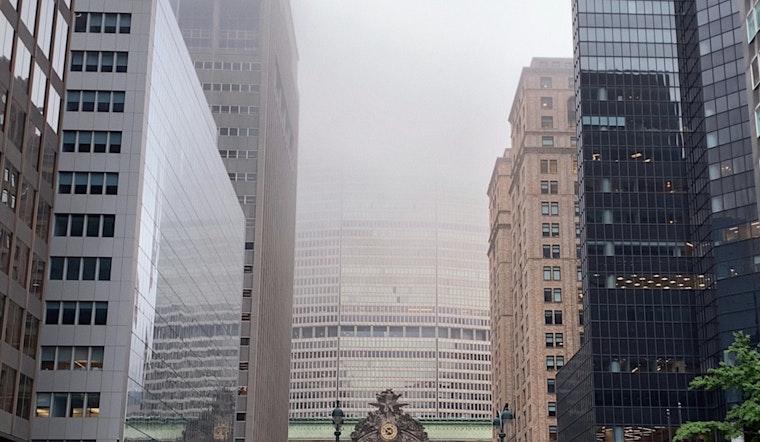
Thick fog is blanketing New York City this Sunday morning, slowing the early commute and cutting visibility to patchy, ghostly pockets as temperatures hover near 51°F. A Dense Fog Advisory is in effect through 9:00 AM EDT on Sunday, March 8, 2026, with pockets of dense fog and a few light showers possible before skies start to clear into the afternoon.
Foggy Morning Commute
Visibility may drop to a quarter-mile or less in spots, especially near the East River, coastal neighborhoods and other low-lying areas. According to the National Weather Service, the advisory covers portions of southeast New York, northeast New Jersey and southern Connecticut, and drivers are urged to slow down, switch on headlights and allow extra stopping distance. Local bridges and surface streets are expected to be the most affected in the early hours, so give yourself extra time and avoid sudden lane changes.
Afternoon And Week Ahead
The fog should lift by midmorning with at least partial clearing from northwest to southeast, and highs are expected to reach the mid 60s this afternoon, which is much warmer than typical for early March. A run of unseasonably mild weather is likely from Monday into midweek, although a strong frontal system is slated to arrive late Wednesday into Thursday, bringing likely showers and a sharp cooldown behind the front. If you are planning outdoor activities, aim for this afternoon or early in the week if you can, since precipitation chances go up again Thursday along with gusty southerly winds ahead of the front.
Boaters And Travelers
Mariners should note that a Dense Fog Advisory is also posted for local waters this morning, and the ocean remains under Small Craft Advisories into tonight, with seas building to 5–7 feet, so it is a good idea to exercise caution or delay departures if possible. Our earlier coverage of Saturday’s fog and drizzle broke down how low visibility snarled commutes across the region, and how low visibility snarled Saturday's commute also included tips from transit agencies. If you have to drive this morning, use low beams instead of high beams, pull well off the roadway if you need to stop, and give transit operators some room to clear station areas as conditions slowly improve.




