

























































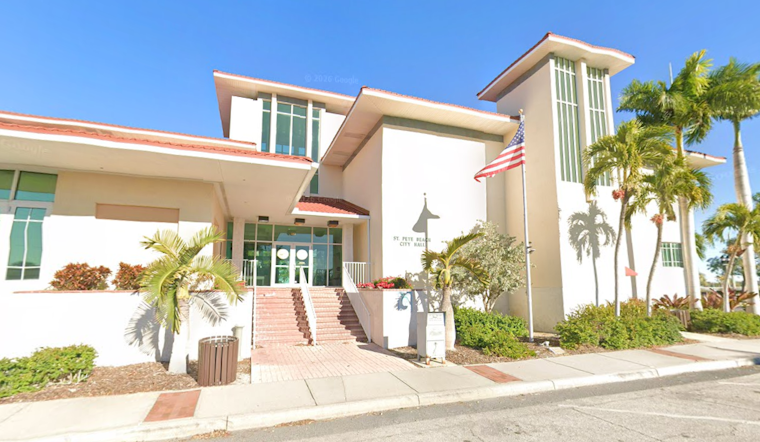
St. Pete Beach residents say they were left shortchanged after the City Commission signed off on new 5G rules that fall short of a promised residential buffer. At a March 9 meeting, commissioners approved changes that stop short of a mandatory 40-foot setback and instead “strongly encourage” that buffer while asking for 500-foot spacing between wireless sites where possible. Neighbors pointed to a 50-foot utility pole with cell equipment that crews placed roughly 36 feet from one front door as evidence the changes will not keep gear off residential blocks.
What the ordinance does
Ordinance 2026-03 revises Chapter 132 to add design standards and review steps for communications facilities in the city rights of way, as outlined by the City of St. Pete Beach. The document frames the changes as compliance minded and includes notice and review provisions meant to steer small wireless equipment away from parks and environmentally sensitive areas. Officials also built in language intended to preserve parts of the code if a court later strikes down specific sections.
Residents push back
Residents from Pass-a-Grille and other neighborhoods say a mandatory 40-foot setback was stripped from the final ordinance and replaced with language that only “strongly encourages” it, according to Tampa Bay 28. One homeowner, Roger Houde, told commissioners a 50-foot utility pole with cell gear was set about 36 feet from his front door, which he said has degraded his service and raised safety concerns after he had previously lost a house to a hurricane. The commission adopted the measure at the March 9 meeting by a 4-1 vote, with Vice Mayor Karen Marriott the lone dissent, leaving residents worried the negotiation and variance process will not be enough to keep poles out of their right of ways.
Telecoms warn of legal fights
Telecom representatives told the commission that placement restrictions like a mandatory separation distance would run into state preemption and promised to litigate if necessary, as reported by The Gabber. Florida's statute governing rights of way, codified at Florida Legislature, restricts local governments from imposing minimum separation distances for small wireless facilities, which is the legal hook for those warnings. That legal landscape is what supporters and critics both say will likely drive the next fight to either the courts or the state Legislature.
Where this goes from here
Residents told Tampa Bay 28 they are now seeking a state-level fix to Florida Statute 337.401 with help from lawmaker Karen Pittman and said they have support from Surgeon General Dr. Joseph Ladapo. City Attorney Ralf Brooks inserted a severability clause so, he said, if a court strikes down the separation requirement other provisions in the ordinance would remain in effect, according to the same reporting. For locals who want clearer protections, that is little comfort, and the dispute over where 5G can go in St. Pete Beach looks set to move beyond City Hall.



