

























































St. Petersburg’s City Council has signed off on nearly $380,000 so archaeologists can dig into a downtown mystery: whether a Tropicana Field parking lot is sitting on top of old graves.
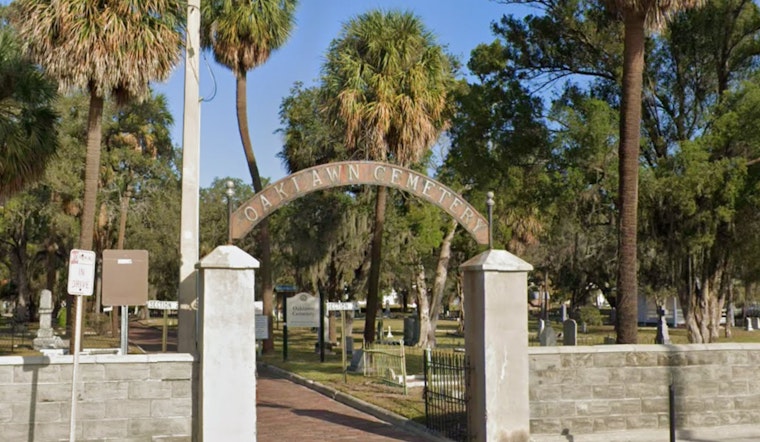
Yesterday, council members voted to fund targeted testing in Lot 1, a parking area across from the stadium, after ground-penetrating radar flagged underground anomalies that might be burials. The work centers on whether remains from the long-razed Oaklawn Cemetery are still beneath the asphalt and fill. City officials say this phase will be limited to careful, non-disturbance “ground-truthing,” meaning small excavations designed to identify and document anything that is found without actually removing human remains. The vote nudges forward a years-long effort to settle what, exactly, lies under land the city has been eyeing for redevelopment.
Council signs off on testing funds
The council approved $378,896 to pay Stantec for field excavations, lab work and a written report, according to the Tampa Bay Times. City documents tied to the contract say Stantec will have 90 days after it finishes its analyses to deliver a formal field and lab report to the city, stakeholders and state preservation officials.
What the radar showed
An expanded ground-penetrating-radar survey in 2024 turned up seven additional anomalies and three other areas of interest in Lot 1, bringing the total to about 10 possible graves, according to an expanded GPR report prepared by Stantec. The technical report notes the site is crisscrossed with buried utilities, layered fill and other ground disturbances that make the radar readings tricky to interpret. Because of that, Stantec recommended tightly focused testing instead of broad excavation.
The report maps out several “operation” areas where crews would test for intact burials and document any artifacts, while leaving remains in place unless legal protocols require otherwise. It also urges that descendants be consulted before any work begins, according to the Stantec report.
Descendants, equity and other burial sites
Council member Corey Givens Jr. and community advocates have pushed hard for robust descendant outreach and for equal scrutiny of nearby burial grounds that once served Black residents. Speaking to WTSP, Givens said the city has a responsibility to honor families and avoid repeating past choices that placed development ahead of dignity.
Historical records and earlier construction projects suggest bodies from Evergreen and Moffett cemeteries were moved decades ago, but the paperwork is spotty. That lack of documentation has fueled calls to widen the investigation beyond Lot 1.
Timeline and safeguards
City officials told the council that testing is expected to start after the baseball season so it will not interfere with games, the Tampa Bay Times reported. The contract, along with Stantec’s recommendations, spells out a cautious approach: descendant outreach, careful sifting and documentation, and a clear directive that no human remains should be removed during ground-truthing unless the law requires it, according to the Stantec report.
Legal and regulatory notes
State preservation officials will review the results and advise on what comes next, and Florida law governs how any human remains or archaeological materials must be handled. Local reporting, including work by WUSF, says the city’s next steps are expected to include descendant outreach, targeted testing in the operation areas and the possibility of additional GPR surveys along 5th Avenue South. Those findings could end up reshaping redevelopment plans for the gas-plant district.



