

























































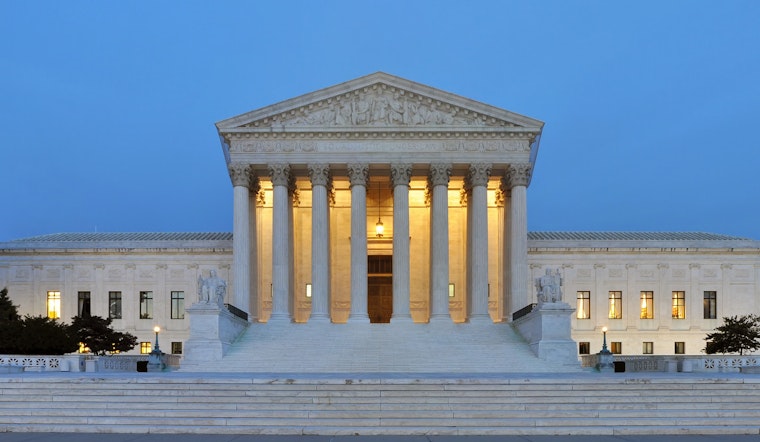
The U.S. Supreme Court on Wednesday sided with Cox Communications, ruling that the Atlanta-based internet provider cannot be held liable for songs its subscribers downloaded without permission and wiping out a trial verdict that once topped $1 billion. The decision tightens when internet service providers can be held secondarily liable for customers’ copyright violations and is set to reshape how labels and broadband companies spar over enforcement. For Cox, a major regional employer and network operator, the ruling lifts a long-running legal cloud that had hung over its core business model.
High Court Tosses $1 Billion Verdict
The justices concluded that Cox “bears no liability for the copyright violations of its customers,” reversing the jury award and lower-court rulings, according to the Associated Press. A Virginia jury had previously found Cox liable for willful contributory and vicarious infringement and hit the company with damages exceeding $1 billion, before the Fourth Circuit later narrowed parts of that blockbuster judgment.
How The Labels Built Their Case
The lawsuit was led by Sony Music Entertainment and dozens of other labels, which said Cox brushed off repeated notices flagging subscribers allegedly using file-sharing networks to trade thousands of copyrighted tracks, as summarized by Justia. At trial, the labels leaned on monitoring by private vendors as well as internal Cox documents to argue the company knew which accounts were repeat infringers but still kept many of them online.
What The Ruling Means For ISPs And Their Users
Broadband providers had warned that a broader view of secondary liability could pressure them to cut off service to entire households, hospitals or campuses after only a handful of infringement notices. Cox, for its part, warned of “widespread disruptions” if courts effectively required such terminations, a concern the company has aired publicly. Analysts and civil-liberties groups have argued that a narrower test for contributory liability helps prevent over-policing of ordinary internet users and preserves basic access, a policy tradeoff explored in reporting by the Washington Post.
Legal Takeaways And What Comes Next
As a practical matter, the ruling tightens the standard for when a service provider can be held responsible for a customer’s wrongdoing: observers note that liability now turns on proof that a provider induced infringement or tailored its service to facilitate it, rather than on mere knowledge of past abuses. Civil-liberties groups such as the Electronic Frontier Foundation had urged the Court to steer clear of a rule that would chill online services, and tech-policy outlets have warned that the decision will reverberate through pending lawsuits and policy fights over how aggressively to police online networks. Lower courts must now sort out which remaining damage claims survive under the high court’s reasoning and whether labels can pursue any alternative theories of relief.
For Atlanta and Cox’s local workforce, the outcome marks a major legal win for a company headquartered in the region, as local coverage has noted, and it sharply reduces the immediate threat of crippling damages for Cox, according to the Atlanta Journal-Constitution. The major record labels have not publicly outlined their next steps, though industry watchers expect more litigation over damages and fresh enforcement strategies from rights holders to follow.





