

























































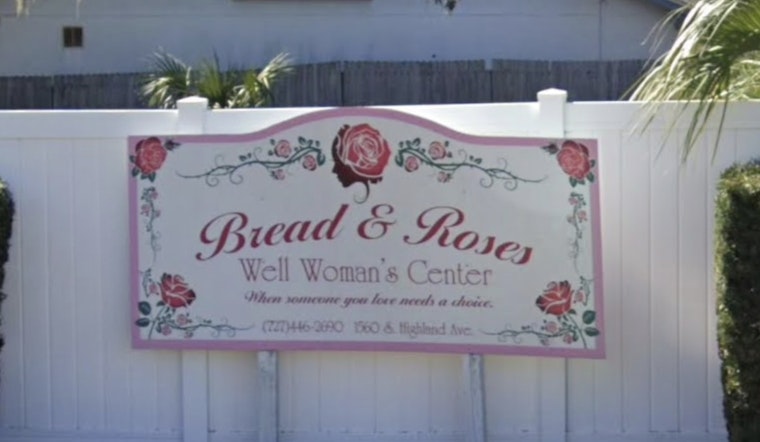
A federal judge in Tampa has permanently blocked Clearwater from enforcing the vehicle buffer zone outside the city’s only abortion clinic, shutting down the five-foot “safety strip” that had walled off part of the clinic driveway from protesters and sidewalk counselors.
The ruling caps months of legal wrangling over a traffic-safety rule that city leaders said was about keeping cars and people apart, while opponents argued it functioned as a speech barrier directed at anti-abortion counseling outside the clinic.
The injunction, which stops Clearwater from enforcing the buffer zone adopted in March 2023, was reported Thursday by the Tampa Bay Times, which noted the order comes after heightened protests at the site. The Tampa Bay Times reported the order on March 12, 2026.
How the buffer zone worked
The Clearwater ordinance carved out about a 38-foot stretch of public sidewalk that covered the Bread and Roses Women’s Health Center driveway. During business hours, pedestrians were barred from entering or crossing within five feet of that driveway and faced civil citations if they did.
According to Justia, the rule contained exceptions for emergency responders and certain clinic staff. Sidewalk counselors and volunteers, however, could no longer step into the driveway area to hand drivers literature or speak with people in vehicles pulling in or out.
Court history and appeal
Plaintiffs, a local nonprofit called Florida Preborn Rescue along with several volunteers, sued Clearwater after the city passed the ordinance. They asked a federal district court for an injunction, arguing the rule violated their First Amendment rights. The district court initially turned them down.
In a 2-1 decision on Dec. 4, 2025, the U.S. Court of Appeals for the 11th Circuit reversed course. The panel concluded the ordinance was likely unconstitutional under the First Amendment and instructed the lower court to grant injunctive relief, which is the step the district court has now taken. That appellate summary is described by Courthouse News Service.
Local reaction and safety concerns
City officials have maintained they created the safety zone in 2023 in response to repeated confrontations at the clinic entrance. Police told reporters they would fall back on other state laws and targeted patrols to address any dangerous behavior if tensions flare again at the driveway.
Clinic volunteers and patient escorts said the buffer zone calmed the scene at the entrance and cut down on driveway confrontations. Opponents countered that the policy singled out pro-life counseling by making the closest point of contact with incoming cars off-limits. Regional coverage has detailed those competing accounts, including the city’s safety rationale and the free-speech complaints, as reported by WUSF.
Legal takeaway
On the legal side, the 11th Circuit leaned on the Supreme Court’s McCullen v. Coakley decision and concluded Clearwater’s rule was not narrowly tailored to the safety goals the city cited. The panel said the ordinance “seriously burdens” the ability of sidewalk counselors to speak with people entering the clinic.
That reasoning, laid out in the appellate opinion, is likely to be watched in other disputes over traffic or safety rules around reproductive-health facilities. Justia reproduces the court’s opinion along with the full text of Clearwater’s ordinance.
For now, the injunction halts enforcement of Clearwater’s five-foot vehicular safety zone at the Bread and Roses clinic at 1560 S. Highland Avenue while the case continues. Both sides have signaled they plan to keep fighting in court. As reported by the Tampa Bay Times, the ruling is the latest round in a broader legal battle over access, safety and speech outside clinic doors.



