

























































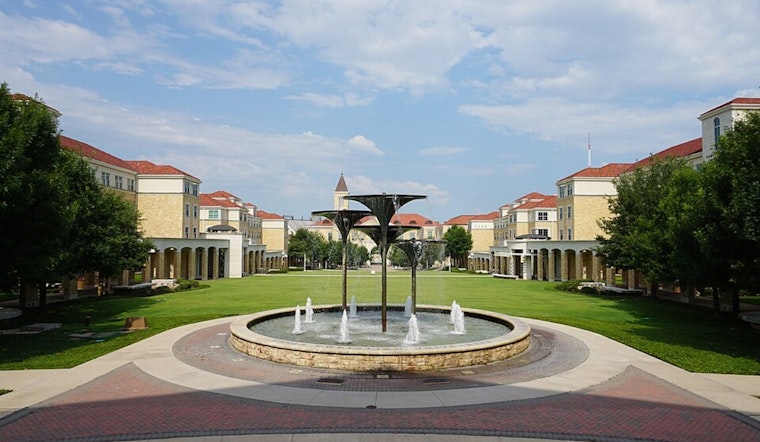
Texas Christian University is charging ahead with a sweeping buildout that will stack thousands of new student beds, fresh retail and more parking along the edges of its Fort Worth campus, with several projects aiming to open in fall 2027. The effort pairs a privately developed mixed-use complex on West Berry Street with multiple new on-campus residence halls and infrastructure upgrades that are set to turn the east side of campus into a full-blown residential hub. University leaders say the construction surge is tied to bigger enrollment goals and a broader push to boost research and day-to-day campus life.
What’s being built
The first big piece out of the ground is Morado on Berry, a two-building project slated to deliver about 780 apartment-style beds, roughly 25,000 square feet of ground-floor retail and an integrated parking component, according to Endeavor Real Estate Group. Geared toward upper-division and graduate students, Morado is planned with hospitality-style lounges, study spaces and a rooftop pool complete with a game-day jumbotron. Developers say the complex is designed to turn Berry Street into a walkable retail strip for students and nearby neighbors, not just a cut-through to campus.
On campus, TCU is backing a slate of residence life projects expected to add roughly 2,450 beds across four locations. That includes a 1,322-bed first-year cluster east of Gutierrez Dining Hall, sophomore-focused buildings and townhouse-style units, per a university board release covered by The Business Press. Taken together with Morado and other private developments in the pipeline, the campus is on track to gain several thousand additional beds around the 2027 timeframe. University officials have cast the blend of market-rate and university-managed housing as a way to stretch campus dollars for academic priorities while still widening student living options.
Why the school is expanding
TCU’s steady enrollment climb is a big part of the story. The university reported nearly 12,980 total students this fall, including 11,152 undergraduates, and has floated long-range targets of roughly 17,900 to 18,000 students by 2035, according to TCU. Housing more Horned Frogs close to class is one piece of that plan.
At the same time, the university has been working to bolster its research profile, a priority that is closely tied to those growth goals. TCU recently announced a $10 million commitment from the Roach Foundation to speed up cross-disciplinary research efforts, per a university release, framing the construction and enrollment push as part of a larger academic upgrade rather than just a dorm boom.
Timeline and campus plan
Several of the housing and infrastructure projects are already in design or early construction and are anticipated to be open before the fall 2027 term, while major renovations such as Ed Landreth Hall are slated to wrap around 2028, according to developer and planning materials. Those pieces plug into a broader campus master plan, developed with design firm Sasaki, that sketches out roughly two dozen new buildings over about a decade. The vision includes new academic spaces, parking garages and athletic facilities, and puts a strong emphasis on knitting the campus more closely to the Trinity River while turning Berry Street into a denser urban village.
University and city planners say the public-private partnership model gives TCU a way to bring new housing online relatively quickly while preserving more of its own capital for academic and research priorities. In theory, that means more beds, more labs and, eventually, less of a scramble every time students try to live near campus.
Neighbors and businesses watching
Along Berry Street, merchants and students told local reporters they are mostly enthusiastic about the prospect of heavier foot traffic and new storefronts, but they are paying close attention to construction timelines, shifting parking patterns and pedestrian safety upgrades. Local coverage has documented TCU purchasing properties along the corridor and noted that traffic and safety planning will be a major community flashpoint as work intensifies, per TCU 360. City officials and university planners say they expect to coordinate closely on permitting and public outreach as schedules tighten and retail tenants are chosen.
Additional reporting by the Fort Worth Star-Telegram details the trustees’ latest update and the full scope of projects both on campus and along Berry Street. TCU and its development partners say leasing plans, property management details and final designs will roll out as permits and financing are locked in, with move-ins targeted for the 2027 academic year.





