

























































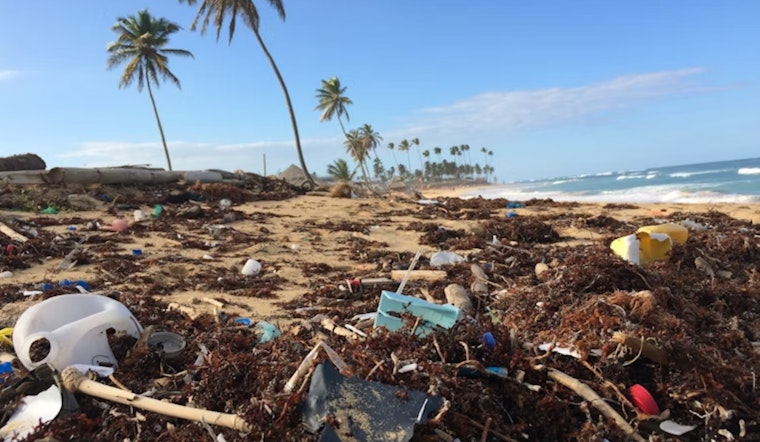
A sweeping new analysis of the world’s oceans has turned up an unsettling finding for California and beyond: human-made chemicals, from prescription drugs and pesticides to the telltale fingerprints of plastics, showed up in every stretch of seawater scientists tested, from murky estuaries to blue water hundreds of miles offshore. After screening more than 2,300 seawater samples with a non-targeted chemical analysis, researchers report that plastic-derived carbon is now measurable even in open-ocean water, raising fresh questions about how industrial chemicals are threading into marine food webs and the global carbon cycle.
As reported by the Los Angeles Times, the team pulled together 2,315 seawater samples from estuaries, coastal zones, coral reefs, and the open ocean and ran them through a mass-spectrometry method that scans for everything in a sample instead of testing only a short list of suspects. Near coasts and river mouths, they found high levels of pharmaceuticals, including beta blockers, antidepressants, and antibiotics, along with insecticides such as DEET and the herbicide atrazine. In some locations, those pollutant signatures made up nearly 20% of dissolved organic matter. The reporting also noted traces of illicit drugs like cocaine and methamphetamine in coastal waters.
How Researchers Mapped a Chemical Shadow Across the Seas
To build a global picture, scientists standardized 21 publicly available datasets from three laboratories and used non-targeted mass spectrometry to identify thousands of compounds across the samples, an approach the authors say lets them name chemical structures and infer likely sources. The work, published in Nature Geoscience, is among the first large-scale meta-analyses to trace human-made chemicals through open-ocean waters. Because the groups used the same instruments and shared open-source data, the team could compare results across regions instead of relying on one-off tests that are tough to line up.
Plastic Carbon Trails Reach Far From Shore
Even where coastal contamination thinned out, petrochemical fingerprints lingered. The study found that plastic-derived chemicals accounted for roughly 0.5% to 4% of organic material in open-ocean samples, including water in the California Current hundreds of miles offshore. “This finding provides further evidence that plastic-derived carbon, including micro- and nano-plastics, contributes a substantial portion to the marine carbon pool,” the authors wrote, a result one outside scientist described as “a pretty sobering view” of pollution’s reach. UC Santa Barbara ecologist Douglas McCauley told the Los Angeles Times that the results raise urgent questions about effects on species from plankton all the way up to whales.
What It Could Mean for California Beaches and Seafood
Finding a chemical in seawater is not the same thing as proving it is causing immediate harm, but the fact that these compounds blend into dissolved organic matter and are available to microorganisms could shift food-web dynamics and, over time, affect fisheries and coastal ecosystems that Californians depend on. The National Oceanic and Atmospheric Administration notes that microplastics and the chemicals that come with them are still an emerging field of study and that standardized ways to measure them are under development, so scientists caution against drawing direct conclusions about human health from a single study. For local managers and fishing communities, though, the paper offers a new baseline and a strong case for broader, standardized chemical monitoring of rivers and shoreline runoff.
Scientists Push for Better Tools and Long-Term Tracking
The study’s authors say their non-targeted approach opens up new lines of inquiry. By identifying compounds that were essentially invisible in past surveys, scientists can prioritize which chemicals to test for persistence, toxicity, and movement through the carbon cycle, according to the paper in Nature Geoscience. The dataset and method, they argue, provide a roadmap for expanding surveillance and for testing whether cutting plastic use, improving wastewater treatment, and tightening runoff controls will actually show up as lower chemical loads in future scans. Policymakers and monitoring agencies will likely need standardized chemical-screening frameworks if they want to track change and evaluate any new interventions over time.
For Californians who swim, fish, or make a living along the coast, the takeaway is that unseen chemistry is increasingly part of the ocean’s background. The study does not point to an immediate public-health crisis, but it does widen the lens on marine pollution and hand researchers new tools to follow how human activity is leaving a chemical imprint on the seas. Expect follow-up studies and expanded monitoring as scientists work to pin down ecological impacts and what, if any, policy steps might make a dent in the chemical load offshore.





