

























































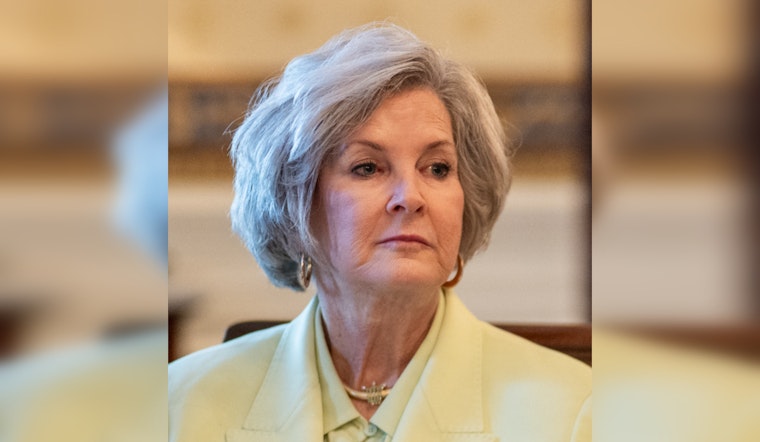
Susie Wiles, President Trump’s White House chief of staff, has revealed she has been diagnosed with breast cancer but says she plans to keep running the West Wing while she undergoes treatment in the Washington area. The 68-year-old says the disease was caught early and her doctors are giving her a strong prognosis. Trump highlighted her diagnosis and praised her toughness in a Truth Social post.
“This past week, I was diagnosed with breast cancer,” Wiles said, adding that she is “grateful to have an outstanding team of doctors who detected the cancer early and are guiding my care, and I am encouraged by a strong prognosis,” according to The New York Times. She said she does not intend to take a leave and will stay on as chief of staff while she begins several weeks of treatment in the Washington region.
Trump publicly disclosed Wiles’s diagnosis on his Truth Social account, calling her “one of the strongest people I know” and saying that “during the treatment period she will be spending virtually full time at the White House,” according to Axios. His post cast her decision to keep working as a signal of stability from the White House.
Wiles’ Role and Recent History
Wiles is the first woman to serve as White House chief of staff, a milestone noted when Trump tapped her for the job, according to the Associated Press. She previously oversaw Trump’s political operation and his 2024 campaign, which returned him to the White House, and she was among the senior aides with the president when he was shot in his right ear during an outdoor rally in Butler, Pa., last July, per reporting by The New York Times.
How Common Is Breast Cancer
Breast cancer remains one of the most frequently diagnosed cancers in the country: roughly 300,000 women in the United States receive a breast cancer diagnosis each year, according to data from the National Cancer Institute. Early detection, which Wiles credited in her statement, is associated with better outcomes and more limited treatment plans for many patients.
Her choice to remain on the job while starting treatment appears aimed at maintaining continuity in a high-pressure West Wing. Aides are expected to help manage her schedule, and she anticipates her treatment will last several weeks while she stays largely in the Washington area, according to Axios.





