

























































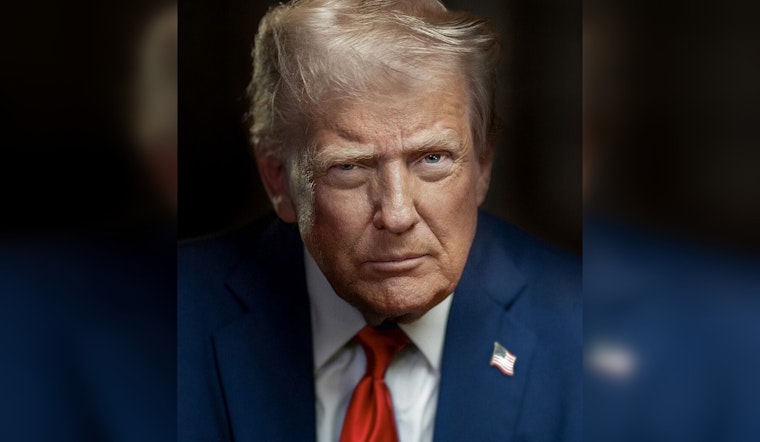
The U.S. Department of the Treasury announced Thursday that President Donald Trump’s signature will appear on future U.S. paper currency, a move officials say is meant to help mark the nation’s 250th birthday. If it goes forward, it would be the first time a sitting president’s signature is printed on Federal Reserve notes, a sharp break with long-standing practice.
In a press release from the U.S. Department of the Treasury, officials said the president’s signature will be printed on upcoming bills alongside that of Treasury Secretary Scott Bessent. "There is no more powerful way to recognize the historic achievements of our great country and President Donald J. Trump than U.S dollar bills bearing his name," Bessent said in the statement. The department is framing the change as part of this year’s Semiquincentennial celebrations.
Part of a Bigger Branding Push
The initial report at Cleveland.com and the wave of coverage that followed tied the currency decision to a broader effort to attach the president’s name or image to public institutions and commemoratives. National reporting has highlighted a federal arts panel’s recent approval of a gold commemorative coin featuring the president and floated proposals to rename transit hubs and airports.
Critics quickly labeled the currency move self-serving, and AP News quoted Rutgers scholar Michael Bordo saying the shift will "undoubtedly come with political pushback." With the president’s signature poised to land in wallets across the country, the symbolism is hard to miss.
Who Prints the Money
The Bureau of Engraving and Printing, the Treasury bureau that designs, engraves and prints U.S. banknotes, will handle any new print runs at its Washington and Fort Worth facilities, according to the agency’s website. The BEP operates the presses that turn blank sheets into Federal Reserve notes and maintains public information about how currency is produced.
For residents in and around Washington, the BEP’s D.C. facility is the closest thing to a front-row seat on the process. New series of notes are prepared there for circulation, meaning the Washington plant is where Trump’s signature would first roll off the presses before heading out through the Federal Reserve system.
Legal Questions
Federal law prohibits using the portrait of a living person on U.S. currency. The rules and past practice focus on images, not signatures, which leaves a gray area that legal experts say could invite challenges. AP News reports that courts and lawmakers have weighed in on similar coin and portrait proposals in recent months.
Legal scholars told the outlet that Treasury’s discretion over design features on banknotes is likely broad, but any move that touches on a living political figure is almost guaranteed to be contentious. "I do not know if he has crossed any legal red lines," Bordo said, while also warning of likely political blowback if the signatures start showing up in everyday transactions.
What This Means in Washington
On the ground, implementation will run through Treasury headquarters at 1500 Pennsylvania Avenue NW and the Bureau of Engraving and Printing’s Washington facility, with coordination from the Federal Reserve on how and when new notes are ordered and released into circulation. The Federal Reserve’s public FAQs describe that ordering and distribution process, and BEP materials spell out the production role the bureau plays.
Officials say the change is largely symbolic and will be phased in gradually as bills are produced and move through the system. For people in the nation’s capital, that means the first visible impact will be behind the walls of the BEP before the new series of notes filters into local banks and cash registers.
Whatever happens on the legal front, and however loud the political fight gets, the redesigned bills would offer a very literal reminder of an administration intent on leaving its mark as the country moves toward its Semiquincentennial.



.jpg)