

























































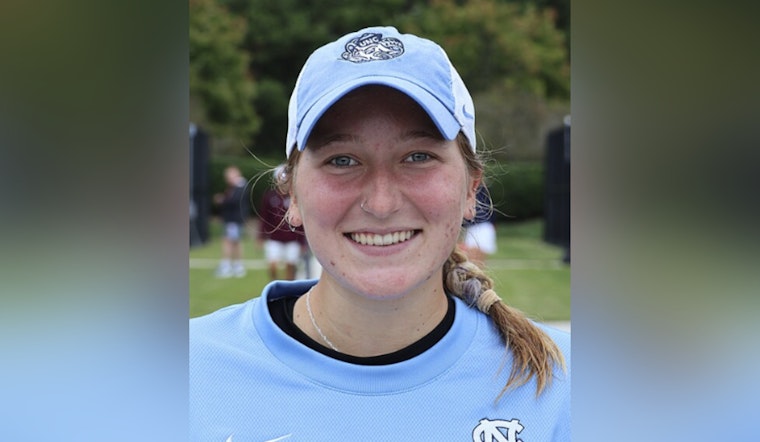
UNC women’s tennis standout Reese Brantmeier and the NCAA say they have struck a deal in her class-action lawsuit over the association’s prize-money limits, potentially setting up a payout shakeup for thousands of college tennis players. If a federal judge signs off, the agreement could also ripple into other college sports where athletes jump between campus and pro events. For now, both sides have asked the court to briefly tap the brakes while they finish the paperwork and line up materials for judicial approval.
Settlement filing and 60-day pause
In a joint filing in the U.S. District Court for the Middle District of North Carolina, the parties told the judge they “have reached agreement on material terms of a class action settlement fully resolving this action” and requested a 60-day stay to button things up, according to Bloomberg Law. They asked the court to pause discovery and other case deadlines while lawyers lock in the settlement language and prepare what they will submit for preliminary approval. Any money or rule changes would still need the court’s blessing, which will only come after class members get notice and a chance to weigh in.
Class certification and who gets notified
The court has already certified two classes, one seeking changes to NCAA rules and another seeking damages, and approved a detailed notice plan that leans on a public website, targeted emails, postcard backups and digital ads to alert potential class members, according to a memorandum filed with the court and posted on Justia. That order spells out how the parties must reach current and former Division I tennis players who may have had to walk away from prize money under NCAA rules, and what information the notice has to provide about their rights and options.
How the lawsuit took shape
Brantmeier first went to court in March 2024, attacking NCAA rules that cap how much prize money college athletes can keep from outside tournaments. She later narrowed the case to focus on Division I tennis and added former Texas player Maya Joint as a co-plaintiff. As reported by WRAL, Brantmeier earned about $48,913 at the 2021 U.S. Open while she was still a high school junior, but NCAA rules at the time let her keep only up to $10,000 plus limited expenses if she wanted to stay eligible for college tennis.
Why this matters in the bigger college sports fight
The Brantmeier case is unfolding while the NCAA and its member schools are already tangled in a series of antitrust settlements that have started to remake how college athletes are paid. That includes a separate, much larger settlement that will send billions to former athletes, according to AP News. Layer on recent changes tied to name, image and likeness rules and multiple courtroom compromises, and the old amateurism model has been steadily loosening, with judges and lawmakers taking on a much bigger role in deciding what college players can earn.
What comes next in court
If the judge grants the requested stay, the lawyers will have breathing room to finalize the settlement terms and file a motion asking for preliminary approval. From there, the court would set a fairness hearing and oversee notice to the classes. A trial had been penciled in for late 2026, but coverage of the case indicates that a completed settlement would make that trial unnecessary, according to reporting from Carolina Journal.
Brantmeier camp’s take on the rules
Jason Miller, Brantmeier’s attorney, has described the contested prize-money cap as an “out-of-date” restriction and said the lawsuit boils down to straightforward antitrust issues with the NCAA’s rules, as he told reporters in comments reported by WRAL. Brantmeier, now a senior and the 2025 NCAA singles champion, has argued that the rule scared off top young players who might have otherwise chosen college tennis and effectively forced some athletes to hand back legitimate earnings just to stay on the team.
The first public hint of a deal came from local TV coverage, when WCCB Charlotte reported on the settlement notice filed with the court on March 2, 2026. Whether the agreement actually goes into effect will hinge on the judge’s review and the class-notice process, but if it is approved, the settlement could reach thousands of current and former college tennis players who have spent years juggling eligibility forms and pro prize checks.





_01.jpg)