

























































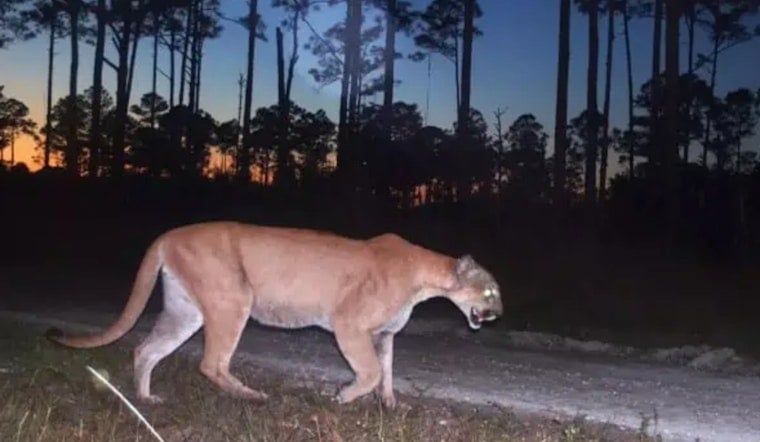
A young, radio-tracked Florida panther has become the latest casualty of South Florida’s roads, after biologists say the three-year-old male was likely hit and killed by a vehicle on a rural stretch of US-27 in Glades County. The animal, known to researchers as UCFP501, was recovered on Wednesday and identified by wildlife staff. His death adds to a long-running tally of roadway fatalities that continue to threaten the state’s small, endangered panther population.
The Florida Fish and Wildlife Conservation Commission confirmed the discovery on its Panther Pulse tracking page, listing UCFP501 as a three-year-old male and placing the recovery site about 1.75 miles south of Florida 29 on US-27 in Glades County. Biologists indicate the cat was likely struck by a vehicle and collected for examination. The finding is recorded on the commission’s Panther Pulse log, according to the Florida Fish and Wildlife Conservation Commission Panther Pulse.
Local reporting by the Tampa Free Press notes the agency refreshed the Panther Pulse entry at 9 a.m. on today and that biologists recovered the remains in Glades County on March 25, as reported by Coty Hamlin. That account reproduces the research ID and recovery location cited by state staff and says a necropsy is expected to confirm the specific cause of death. The Tampa Free Press update is available at the Tampa Free Press.
Vehicle strikes remain the biggest threat
State wildlife managers say vehicle collisions are the single greatest cause of mortality for Florida panthers, a pattern conservationists link to habitat loss, road expansion and rising traffic through panther corridors. The commission’s public notices highlight panther speed zones and urge drivers to slow down where those zones are posted, both to protect the animals and to keep motorists out of the repair shop.
For background on recent counts and agency guidance, see reporting on recent trends by WUSF.
How residents can help
Wildlife officials ask anyone who spots an injured, sick or dead panther to report it so biologists can respond quickly and collect information; media accounts repeat the agency’s Wildlife Alert Hotline as 888-404-FWCC (3922). Buying the "Protect the Panther" specialty license plate is also a primary funding source for panther research and emergency response, the agency says. If you encounter a panther, do not approach the animal — report the sighting to authorities and follow instructions from wildlife professionals, per local reporting in Gulf Coast News.
Biologists typically perform necropsies on recovered animals to confirm cause of death and to gather data that can guide conservation and road-planning decisions, and officials said results will be released when available, according to local reporting. Conservation groups and transportation planners continue to push for more wildlife crossings and fencing on priority corridors; coverage of recent efforts to add underpasses and fencing in parts of South Florida highlights one strategy to reduce collisions, as reported by WUSF.



