

























































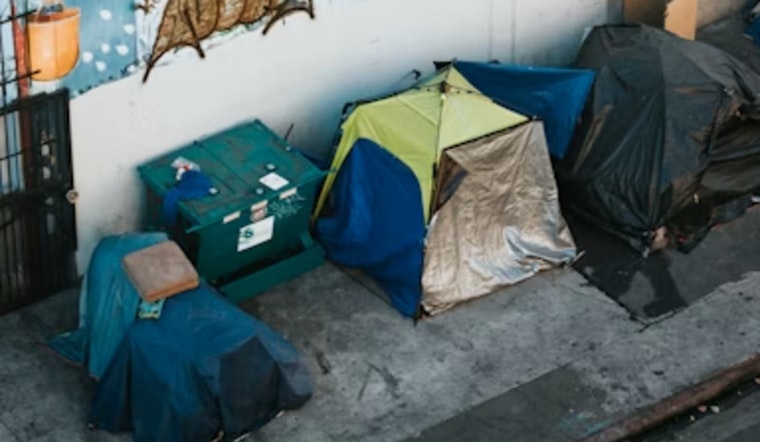
If life in Venice feels like déjà vu, neighbors near Rose Avenue say you are not wrong. Tents and bicycles have reappeared in the courtyard behind the long-vacant Rose restaurant at Rose Avenue and Hampton Drive, three years after a high-profile cleanup cleared the block. Residents and business owners say the return has revived old worries about theft, open drug use, and what they describe as an endless cycle of sweeps, brief calm, and slow repopulation along Venice’s back streets.
Local news crews filmed the courtyard on Tuesday as people set up new makeshift shelters in the same stretch that city programs previously cleared, as reported by ABC7. That block was the focus of an Inside Safe operation in early 2023 that moved dozens of people into interim hotel rooms and temporarily opened the sidewalks, according to the Los Angeles Times. City officials said outreach during those efforts ultimately housed more than 100 people in the neighborhood.
Residents say that kind of enforcement-heavy push scatters people only for a while. “We need to not have to keep having a land war like every few months in the same place,” Mark Ryavec of the Venice Stakeholders Association told ABC7. A woman identified as Kat told the station she plans to sleep “right back where I was until I get housing.” Neighbors also said cleanups can mean the loss of personal items like IDs and birth certificates, which in turn makes it harder for people to get services or find work when they are ready to move indoors.
Enforcement zones and the 41.18 effect
The encampment sits between specially designated LAMC 41.18 “resolution zones,” a gap city officials say has allowed a small number of persistent individuals to return to this particular strip. The ordinance restricts sitting, sleeping, and storing property in certain areas, and critics argue it simply pushes people a few blocks over rather than solving anything.
Human Rights Watch has documented how 41.18 and repeated sanitation sweeps can disperse encampments without addressing housing needs, often pushing people into nearby stretches that are not protected by special designations. For a deeper look at that pattern citywide, see the report from Human Rights Watch. The mayor’s Inside Safe initiative is intended to pair street clearings with offers of interim housing and services, and the city’s briefing lays out those goals along with recent operations. Mayor Bass' office says outreach teams remain active on the Westside.
Neighbors and businesses push back
The current encampment clusters around the vacant restaurant courtyard that once hosted outdoor dining, and owners have been clearing mattresses and other debris left behind. Local reports and television crews have captured accounts of thefts, burglaries and harassment that neighbors and businesses tie to the returning camp, and some operators say vandalism has delayed plans to reopen.
Coverage in the Culver City Observer documented those concerns this week as outreach teams and sanitation crews worked the block. Residents who live and work nearby say they are frustrated that an encampment they watched disappear during Inside Safe is back in essentially the same footprint.
Councilmember Traci Park’s office told reporters it is working to close the gap between enforcement zones and to coordinate more consistent outreach along the corridor. The mayor’s team says it will continue housing-first operations in Venice, with officials emphasizing offers of shelter, services, and casework for people willing to accept help. They did not provide an immediate timetable for new placements at the Rose Avenue site, though outreach workers were on the ground this week talking with people and offering connections to available beds and support.
For the city’s official description of Inside Safe and recent operations, including those that previously targeted this area, see the release from Mayor Bass' office.





