

























































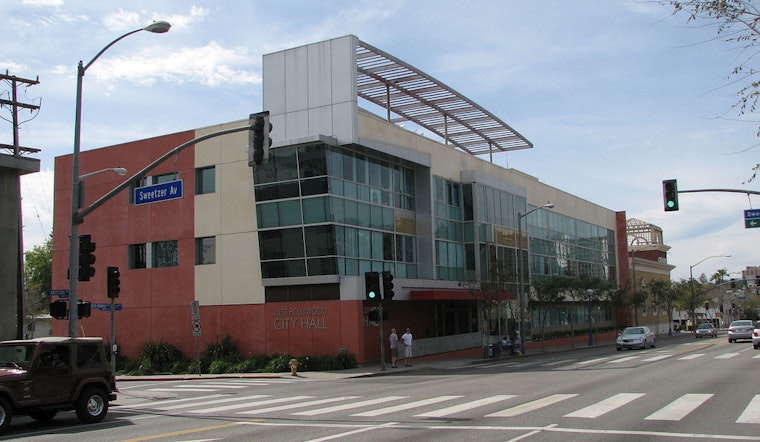
The West Hollywood Planning Commission has signed off on a proposal that would move a large share of housing approval power out of the public hearing room and into staff offices at City Hall. On a 6-1 vote, commissioners agreed to send a zone text amendment up to the City Council that would let staff sign off on many projects that now require a full Planning Commission hearing. The approval followed a late swing by several commissioners, prompting residents and one commissioner to warn that public oversight was being gutted. “This isn’t streamlining,” Commissioner Lynn Hoopingarner said during the meeting; “it’s a total removal of public transparency and accountability.”
As reported by WEHOonline, the vote came after a dramatic reversal on the dais. An initial 4-3 split flipped once a compromise was floated on how design review would work, and Commissioner Andrew Solomon ultimately made the motion that passed 6-1. The recommendation, labeled Resolution No. PC 25-1625 asks the City Council to adopt a Zone Text Amendment that raises the size thresholds for commission review and allows staff-level approval for a broader range of residential and mixed-use projects. Supporters said the changes are needed to move long-stalled applications, while opponents argued that the city is trading transparency for speed.
The push did not come out of nowhere. A City Council directive on May 5, 2025, told staff to find ways to accelerate housing approvals and to explore more ministerial pathways for smaller projects. The May 5 council packet specifically directed staff to prepare a Zone Text Amendment and to consider raising the Planning Commission review threshold, with an initial staff benchmark of 100 units. The council memo framed the work as part of a short- and long-term strategy to help the city meet state housing deadlines and production targets.
What the ZTA would change
The draft ordinance attached to the commission’s resolution would amend Title 19 and Table 4-2 of the municipal code so that more developments qualify as a “Qualifying Housing Project,” which could then be approved by the Community Development Director instead of going to a noticed Planning Commission hearing. Resolution No. PC 25-1625 also revises public noticing rules, clarifies appeal paths, and folds several procedural revisions into a broader permit streamlining package. The ordinance text carves out exceptions, including larger projects, projects that need variances, and certain cases in the Sunset Specific Plan area, which would still require commission review. Even with those carve-outs, the overall effect is to shift routine review from public hearings to staff-level decisions in many additional situations.
The debate at the meeting leaned heavily on staff data and process critiques. Commissioners and public speakers, including Commissioner Hoopingarner and several residents, cited staff numbers indicating that much of the approval timeline is driven by applicants and internal administrative processing. They warned that trimming Planning Commission review could mean losing a formal public record and a Brown Act hearing in many cases. Proponents, including a representative from Abundant Housing LA, countered that faster, more ministerial approvals are necessary to clear a clogged pipeline and keep the city on pace with its housing goals. WEHOonline reported those exchanges and the final roll call.
Why now: housing targets and state pressure
City officials have repeatedly pointed to West Hollywood’s Regional Housing Needs Assessment obligations and state law pressure as the driving force behind the timing. The city’s sixth-cycle housing planning documents show an allocation of roughly 3,900 to 3,924 units that West Hollywood must plan for during the 2021 to 2029 cycle. The proposed Zone Text Amendment is presented as one administrative tool for removing local bottlenecks so that projects meeting objective standards can be permitted more quickly. Critics counter that hitting RHNA targets should not mean giving up public hearings and transparent on-the-record deliberations.
Legal and transparency questions
Opponents also raised questions about how the proposal intersects with California’s open-meeting laws. They questioned whether a one-commissioner advisory role at an applicant-run neighborhood meeting would satisfy the Ralph M. Brown Act, which governs how local legislative bodies conduct public meetings. Staff told the commission they are trying to design an advisory format that would not constitute a Brown Act body, while still allowing for some community input. The draft resolution includes a CEQA determination that references the Housing Element Environmental Impact Report, treating the Zone Text Amendment as an implementation-level code update rather than a separate, standalone project.
The next step is procedural but significant. The Planning Commission has forwarded Resolution No. PC 25-1625 to the City Council, which will decide whether to adopt, amend, or reject the proposed code changes. The council’s direction in May 2025 set the staff works in motion; now councilmembers will decide whether to embrace faster, more ministerial approvals or preserve the kind of public, noticed hearings that critics describe as the last meaningful forum for neighbors to weigh in.





