

























































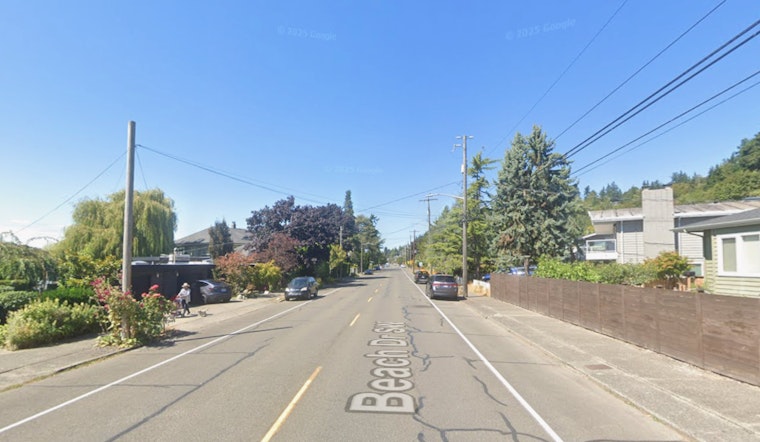
A chunk of hillside above the 5000 block of Beach Drive SW in West Seattle gave way on Tuesday, sending soil, trees and a hefty pile of debris crashing into two yards below. City crews and inspectors moved in quickly, and there were no reports of people trapped or injured.
As reported by the West Seattle Blog, Seattle Fire dispatched several units to the 5000 block, and department spokesperson David Cuerpo told the outlet, “Crews evaluated the debris from the landslide and determined no one was trapped or reported injuries.” The blog also reports that the city’s Department of Construction and Inspections said the slide affected three properties, one above the failure and two below, and that inspectors posted yellow tags on each of those properties.
Why This Stretch Is Vulnerable
According to the Seattle Department of Construction and Inspections landslide study, the Alki/Beach Drive bench has one of West Seattle’s highest densities of shallow colluvial and debris-flow landslides, where perched groundwater and saturated soils can mobilize during heavy rain. That history helps explain why the city moves fast when loose material reaches private property or the public right of way.
What the Yellow Tags Require
The Department of Construction and Inspections posted yellow tags that “require property owners to hire a Geotechnical Engineer to evaluate the slide area,” the city told the West Seattle Blog. Depending on what that engineer recommends, the city can require stabilization work, slope repairs or other measures to protect neighboring homes and the public way.
Neighbors and Next Steps
Photos from the scene show a large pile of soil in one backyard and more soil and debris pushed over a fence on the north side of another property below the slide. City staff say they will review geotechnical reports and coordinate any required repairs, while residents in slide-prone zones are advised to watch for new movement, clear drainage lines where it is safe to do so, and report hazards to city officials.




