

























































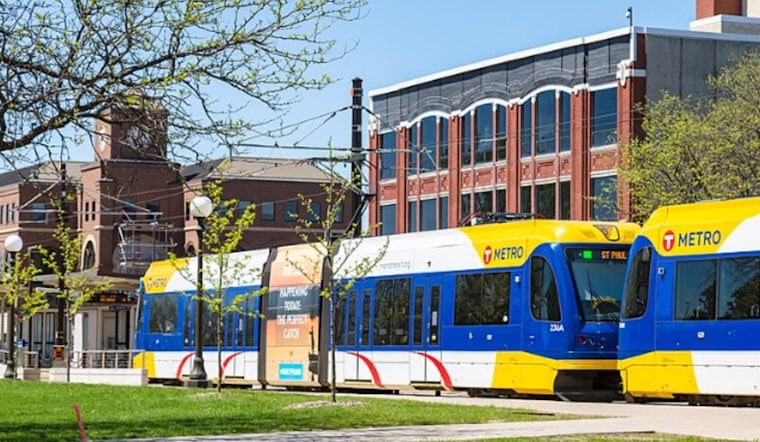
The Metropolitan Council is expected to decide later this month whether to sign off on Metro Transit’s push for a METRO J Line, a bus rapid transit route along West Seventh Street that would connect downtown St. Paul to the Mall of America. The same move would also advance early planning on a METRO K Line along Nicollet Avenue in Minneapolis as the region leans into a broader service expansion.
What The Council Will Weigh
Metro Transit has told regional officials it plans to bring a formal recommendation in March that the METRO J Line on West Seventh and the METRO K Line on Nicollet move ahead in the planning pipeline. The agency is also rolling out a near-term slate of service tweaks starting March 14, including more frequent service on Route 94 and schedule changes on dozens of other routes, according to Metro Transit.
How The J Line Would Reshape West Seventh
The West Seventh proposal treats bus rapid transit as one piece of a full corridor overhaul that combines faster buses with safer walking and biking infrastructure, and city officials say the stretch has been waiting decades for a serious upgrade. As noted by the City of Saint Paul, Council President Rebecca Noecker has backed the BRT recommendation, and the city is gathering public feedback on both the route design and the specific alignment choices.
How It Fits Into Network Now
The timing aligns with Metro Transit’s Network Now initiative, which increases frequency, restores selected routes, and pushes ahead with arterial BRT lines around the metro. As laid out by the Metropolitan Council, Network Now is designed to grow transit service to roughly 35 percent above recent levels by 2027 through a mix of new routes, additional trips, and faster high-priority corridors.
Costs, Subsidies And Tough Tradeoffs
That growth strategy is colliding with a separate deep dive into operating costs and per-passenger subsidies, which has set off debate over which routes should keep getting public dollars. Coverage of the latest Met Council hearing describes an analysis of routes across several providers that flagged a group of high subsidy services and estimated how much could be saved annually if some of those lines were modified or reduced, a summary reported by the Pioneer Press. The underlying study stems from a state requirement that agencies calculate per-passenger subsidies by route type, according to Minnesota legislative records.
Safety, Riders, And The Rollout
Metro Transit says it is tying that service expansion to a stronger presence on buses and trains and more direct outreach to riders. Recent updates from the agency highlight that more than 130 TRIP agents are now riding light rail and BRT lines, the Metro Transit Police Department has 35 community service officers, and key safety metrics show serious assaults have declined while proactive calls for service have risen as staff lean into prevention. The agency also plans this spring to hire a community-based partner to connect riders facing behavioral health needs or unsheltered homelessness with resources, according to Metro Transit.
What Happens After The Vote
The Met Council’s March decision will determine whether detailed planning for the J and K lines proceeds; any green light would launch a multi-year design, environmental review, and funding phase rather than immediate construction. Local coverage indicates planners expect the METRO J and K corridors to roll out in stages over the next decade, with full launches dependent on federal funding and coordinated capital projects, timelines that could easily stretch into the early 2030s.





.jpg)