

























































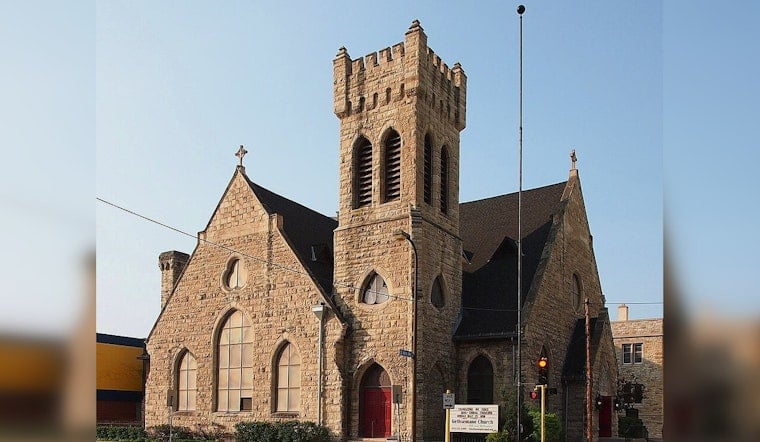
One of downtown Minneapolis' most recognizable Gothic Revival churches is quietly looking for a new chapter. Gethsemane Episcopal Church, perched on the edge of downtown, has been listed for sale as a redevelopment play, even as the 19th-century sanctuary still shelters a rare Tiffany stained-glass window above the altar. The listing frames the site as a prominent "gateway" property, which puts the spotlight squarely on the familiar tug-of-war between historic preservation and the demand for centrally located land.
According to the Minneapolis/St. Paul Business Journal, brokerage materials call the offering "not a generic church listing" and highlight its highly visible position at the edge of the downtown core. A commercial listing on LoopNet advertises the property at about $1.41 million and roughly 27,000 square feet, positioning it for possible retail, residential, or mixed-use reuse. That price point and location are likely to draw developers who hunt for infill sites that come with a little architectural drama built in.
Landmark status and preservation review
The City of Minneapolis historic preservation profile lists Gethsemane as a locally designated landmark, noting its National Register status and the Louis Comfort Tiffany chancel window installed in 1895. The city's preservation guidance makes clear that locally designated properties cannot be significantly altered or demolished without review by the Department of Community Planning & Economic Development and the Heritage Preservation Commission. Any major exterior changes would trigger a public hearing and potential conditions on the project.
Those protections can slow or reshape redevelopment, since developers have to design around what the city considers character-defining elements. At the same time, landmark status can unlock federal and state historic rehabilitation tax credits, which may help a buyer finance a substantial restoration or adaptive reuse.
Community uses and congregation history
Beyond Sunday services, the building has long housed community programs, including a food pantry known as Shelf of Hope, underscoring its role as a neighborhood support hub even as regular worship numbers declined. Parochial reporting compiled on church-reporting sites indicates that Gethsemane's final Sunday morning service took place in November 2019 after years of shrinking membership.
That legacy of local service could influence how neighbors and former parishioners respond if a new owner moves to shift the building's role from civic gathering space to something more commercial.
What developers will weigh
Any buyer will have to balance the site's central location and visibility with the time and cost of preservation review, the technical hurdles of converting a church to contemporary uses, and the obligation to protect significant features such as the Tiffany window. Common adaptive reuse paths for historic churches include housing, event venues, arts or cultural spaces, small-office clusters, or mixed-use concepts that pair ground-floor retail with homes above. Each scenario comes with its own mix of permitting requirements, financing strategies, and design challenges.
Developers may look to historic rehabilitation tax credits or seek design variances to make a project pencil out while keeping key architectural details intact. For now, no offers have been publicly disclosed. The listing sets up the next act in downtown Minneapolis' ongoing story of old buildings and new ambitions, and early bids and preservation filings will determine whether Gethsemane is revived as a restored civic anchor or transformed into a different kind of gateway at the city's edge.





