

























































Minnesota lawmakers are closing in on a $100 million rescue package for businesses rocked by Operation Metro Surge, with the biggest chunk of the help aimed squarely at the Twin Cities. The proposal would steer $82 million to firms in the seven-county metro and reserve $18 million for Greater Minnesota, targeting businesses that can prove revenue losses of more than 30% between Dec. 1, 2025 and Feb. 28, 2026.
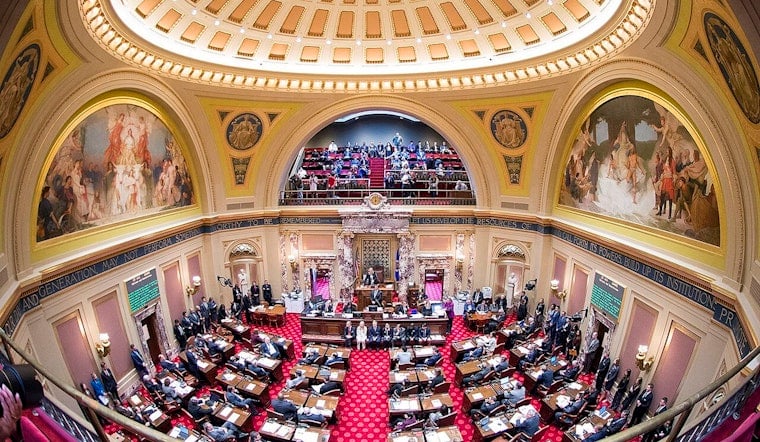
The measure has cleared its first major hurdle, getting voted out of committee and placed on the Senate floor calendar, according to the Minnesota Senate Journal. Senators are still haggling over who exactly qualifies and how tightly the program will be policed before leadership schedules a final vote.
What the bill would do
Under the Senate plan, $100 million would be pulled from the Minnesota Forward fund and parked in a new small-business recovery loan account administered by the Department of Employment and Economic Development. Of that total, $18 million would be funneled through the Minnesota Initiative Foundations for loans in Greater Minnesota and $82 million would support loans in the seven-county metro area, as detailed in the bill text at the Office of the Revisor of Statutes.
Approved partner organizations would be responsible for underwriting, servicing and monitoring the loans, while DEED would purchase a 100% participation interest. Up to 5% of the appropriation could cover partner administrative costs and 2% could be used for DEED oversight. Loan terms could not exceed 60 months, payments would have to start within three months of the award, and borrowers could apply for forgiveness of up to 60% of the principal after making 24 consecutive on-time payments.
Lawmakers spar over funding and geography
Republicans have pressed the majority on two fronts: whether Minnesota Forward is the right pot of money to raid, and whether metro-focused relief leaves Greater Minnesota holding the short end of the stick. Democrats counter that concentrating dollars where the economic shock was sharpest is the fastest way to stabilize key commercial corridors.
"That is the history of Minnesota. Why should now be any different? It shouldn't be different," Sen. Bobby Joe Champion said, defending the targeted approach, as reported by FOX 9.
Cities and counties already moving
While the Capitol debate plays out, local governments are not waiting around. Minneapolis has approved a $7 million Small Business Resiliency Fund meant to cover license fees, market activations and technical assistance, according to a city press release. Hennepin County has signed off on a separate $2 million recovery fund for local grants, WCCO reported, and the Star Tribune has estimated that the surge cost Minneapolis roughly $200 to $205 million in January alone.
Next steps and oversight
The bill instructs DEED to commission a comprehensive economic-impact analysis and sets aside $250,000 for that work, with the loan funds available through June 30, 2028, according to the Office of the Revisor of Statutes. It would also cancel a prior $100 million Minnesota Forward appropriation to help finance the package and layers in fraud-deterrence measures and reporting requirements for partner lenders.
If the Senate signs off, loans would move through certified partner lenders while state officials track repayments and potential fraud, a structure majority Democrats say will let repayments gradually refill the Minnesota Forward account, according to FOX 9. Business owners, chambers of commerce and local leaders are watching the roll call closely; for many hard-hit small firms, a partially forgivable loan could be the thin line between reopening and shutting down for good.





