

























































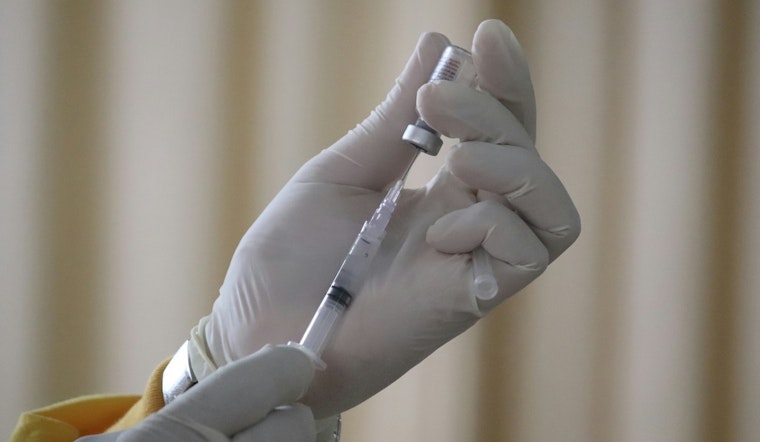
A 72-year-old patient who signed up for a Memorial Sloan Kettering (MSK) clinical trial of a personalized mRNA vaccine for pancreatic cancer is now cancer-free, according to researchers and the patient herself. The experimental shot is tailored from each person’s own tumor, and in this early study roughly half the participants mounted a measurable immune response. Follow-up data presented this week at the American Association for Cancer Research meeting show vaccine-stimulated T cells lingering for years in some patients, an unusually durable signal in a cancer that usually brushes off immune attack.
That patient, Donna Gustafson, was the first person to enroll in the autogene cevumeran trial in late 2019. She received eight infusions of the vaccine, completed chemotherapy and later got a booster, according to ClickOnDetroit. Joining the trial “was a no-brainer,” she told the outlet, adding, “Every day I wake up and thank God I’m here.” Her story appears in MSK’s patient reporting and in the updated trial data presented at this year’s meeting.
What The Phase 1 Follow-Up Found
The investigator-led phase 1 study enrolled 16 patients. Eight of them generated high-magnitude, neoantigen-specific T cell responses, and those responders went longer without their cancer coming back than non-responders did, according to the peer-reviewed Nature paper and MSK’s follow-up summary. With longer follow-up, researchers could still detect vaccine-expanded T cell clones years after treatment. Even so, two of the eight initial responders later experienced recurrence.
MSK investigators are quick to say the data are early and based on a very small group. Still, they argue that the persistence and apparent function of those vaccine-primed T cells amounts to an important proof of concept for pancreatic cancer, a disease that has rarely budged in response to previous immunotherapy efforts.
How The Vaccine Works
The vaccine, called autogene cevumeran, is built for each patient. Developers BioNTech and Genentech design every batch from that person’s tumor sequence so that it can encode up to 20 neoantigens, per the companies’ release. In MSK’s protocol, patients first received a single pre-vaccine dose of the checkpoint inhibitor atezolizumab, then eight priming infusions of the vaccine, followed by a course of mFOLFIRINOX chemotherapy and a final boost, a regimen laid out in the Nature publication.
Lab tracing in the trial found de novo CD8+ “killer” T cell clones along with supportive CD4+ cells that can stick around over time. That kind of long-lived cellular army offers a plausible biological explanation for why some responders saw delayed recurrences or remained cancer-free during follow-up.
What’s Next For Testing And Patients
Building on the phase 1 signals, researchers have launched an open-label randomized phase 2 trial (NCT05968326). The study is testing autogene cevumeran plus atezolizumab and chemotherapy against standard chemotherapy alone and is now enrolling at MSK and other centers worldwide, according to MSK’s clinical updates. The institution also reports it is expanding in-house manufacturing capacity to support personalized vaccine strategies like this one and to open the door for more patients to enroll in trials.
Patients and clinicians can find detailed trial information on MSK’s clinical-trials page and through participating sites listed in sponsor materials.
Experts stress that everything so far comes from a tiny group of volunteers and that only larger randomized trials can say whether this approach truly changes survival. Even so, they describe the persistent T cell signal as “encouraging” for a cancer that has long resisted immune-based treatments. As NBC News notes, the key takeaway at this stage is that patients who mount a vaccine response seem to live longer, a finding that researchers now hope to confirm in much bigger studies.


