

























































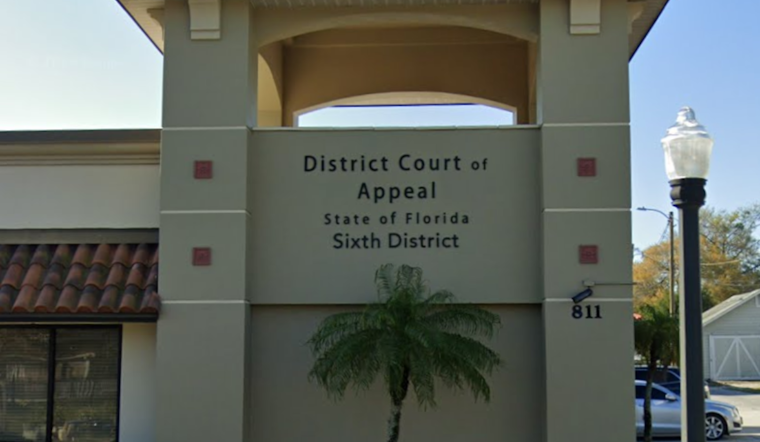
A Florida appeals court has yanked a Kissimmee drug trafficking case back into play, reversing an Osceola County judge’s decision to discharge the defendant and ordering a do-over on a key procedural question.
In an April 10 opinion, the Sixth District Court of Appeal ruled that the trial judge moved too fast when she released Andres Hipolito from felony drug trafficking charges after deciding she had improperly struck his demand for a speedy trial. The appeals panel said the lower court never completed a legally required inquiry into who caused the delays in the case, so that issue now heads back to Osceola County for a fresh look.
Sixth District Says Trial Court Skipped Required Inquiry
The Sixth District Court of Appeal reversed Hipolito’s discharge after concluding that neither the written order nor the judge’s comments in court showed the kind of inquiry that Florida Rule of Criminal Procedure 3.191(p)(1) and (j) demand. Associate Judge R. H. Martin wrote the opinion, filed April 10, explaining that before a defendant can walk away under the speedy trial rule, the court has to pin down whether delays were “attributable to the accused” or whether the speedy trial demand was invalid because the defense was filing substantive motions.
According to the Sixth District Court of Appeal, the case is being sent back to the Osceola County circuit court so a judge can finally conduct that inquiry on the record.
How The Case Got Here
Hipolito was charged by information in July 2022 alongside ten co-defendants and later spent time in custody after a bond revocation, the appellate opinion recounts. In October 2024, while he still faced a bundle of substantive motions, including a venue challenge and a dispute over whether the statewide prosecutor had jurisdiction, Hipolito filed a demand for a speedy trial.
At a December 23 hearing, the trial judge struck his speedy trial demand on her own initiative. She later acknowledged that the move was improper and, in January 2025, granted Hipolito a full discharge from the case. The State appealed that ruling, as reported by the Tampa Free Press.
What Rule 3.191 Requires And Why It Matters
Florida’s speedy trial rule, 3.191, does not let a judge simply hit the eject button when deadlines slip. Before granting the drastic remedy of a discharge, the court must hold a hearing and dig into whether the defendant or defense counsel caused any delay.
The Florida Supreme Court has recently amended parts of Rule 3.191, with changes set to take effect July 1, 2025. Because those revisions are not yet in force, the appeals court applied the 2024 version of the rule to Hipolito’s case while noting that the speedy trial framework is in flux. For more on those changes, see the Florida Supreme Court.
What Happens Next In Osceola County
On remand, the circuit judge will have to decide whether the trial delays were “attributable to the accused” or whether Hipolito’s speedy trial demand was invalid because of the pending substantive motions. If the court finds that the delays sit on the defense side of the ledger, the charges can be reinstated, and a new trial date must be set within 90 days.
If the judge again determines that discharge is appropriate, the criminal case stays closed, and Hipolito remains free of these charges. Either way, the ruling resets a prosecution that has been winding through the system since mid-2022 and underscores how strictly following procedural rules can determine whether a case survives or quietly dies on the docket.





