

























































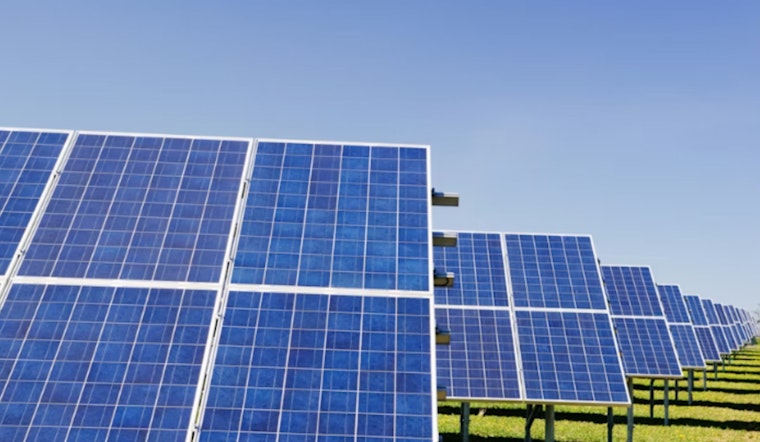
Arizona Public Service has flipped the switch on a massive new battery system at its Agave solar site west of Phoenix, designed to soak up surplus midday sunshine and feed that power back to the grid after dark. The utility says the project is aimed squarely at the steep evening ramp that has been tripping up solar-heavy grids as the sun sets and air conditioners keep humming. APS leadership argues the batteries will help keep more clean energy in the mix and take some pressure off customer bills.
Speaking with 12 News, APS President and CEO Ted Geisler put it bluntly: "we are producing power that their grid can't handle, and they actually pay us to take that power," he said, adding that "we store it in these batteries and then use that power for our customers."
What Agave Is
The Department of Energy's Loan Programs Office has described the Agave Battery Energy Storage System as a 150-MW, four-hour (600-MWh) installation that sits alongside the Agave solar plant and stores excess daytime generation for evening use, according to the Department of Energy. Project filings lay out the battery footprint and safety systems and show the site was engineered from the start to accommodate storage.
Pairing Solar With Storage
APS says pairing batteries directly with the solar array lets the company capture generation that would otherwise be curtailed during the brightest hours of the day and then discharge that stored energy into the grid during evening peaks, smoothing operations and boosting reliability, according to APS. The Agave photovoltaic plant came online in 2023, and the battery project is the next phase in a plan to keep more of those clean megawatts available after sunset.
How California's Midday Oversupply Fits In
Geisler told 12 News that APS at times takes in surplus solar power that California cannot use, and that market conditions can actually make it economical to do so. Independent analysis from REsurety documents a growing share of negative-price hours in parts of the CAISO market, underscoring why batteries that charge in the middle of the day and discharge at night are gaining value.
Money, Loans And A Changing Federal Backdrop
In January 2025, the DOE announced a conditional $1.81 billion loan guarantee for APS that specifically identified the Agave BESS as an early candidate for support. Subsequent reporting has shown that the department later de-obligated some earlier commitments. Utility Dive reported that DOE has re-reviewed and removed certain loan obligations as part of a broader portfolio shift, leaving federal financing for portions of the program uncertain even as project filings remain available for technical detail.
What It Means For Customers
For customers in the Phoenix area, the near-term promise is old-fashioned reliability. By shaving the evening ramp, batteries can reduce how often APS has to fire up peaker plants when demand suddenly jumps. Pinnacle West and APS have pointed to rising electricity demand in Arizona and plans to add substantial new renewable and storage capacity as part of a broader strategy to meet that growth while keeping costs in check, according to a recent company release.
In the end, APS' Agave batteries are a very local answer to a very national problem: how to make the sun useful after dark. Whether that translates into noticeable relief on monthly bills will hinge on market rules, transmission bottlenecks and how aggressively APS chooses to deploy stored energy during future peaks. Regulators and customers alike will be watching as the site ramps up.





