

























































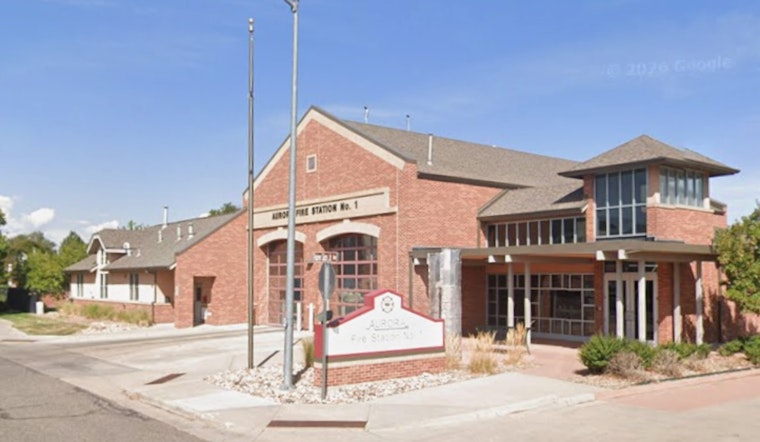
Aurora firefighters are not just reversing overdoses on the spot; they are leaving overdose-reversal medication behind so the next crisis is less likely to turn fatal. Aurora Fire Rescue officials say city leaders are crediting their "leave-behind" Narcan initiative with preventing deaths after opioid overdoses by leaving extra naloxone doses and instructions with patients, family members, and roommates at the scene. The program pairs on-scene reversal with follow-up outreach that tries to connect survivors to treatment and other services.
How the program works
After stabilizing a patient, firefighters and paramedics leave an additional Narcan kit and printed instructions with the person or someone nearby, even if the patient refuses to go to the hospital. The city says the kits came through a state grant and the Naloxone Bulk Purchase Fund, and that the initiative is designed to reduce repeat 911 calls while serving as an entry point to treatment, according to the City of Aurora.
Officials cite early results
"This is about keeping people alive," Lt. Jack Thompson told the Aurora City Council Public Safety committee, describing a case in which rescuers left a dose that a roommate later used when the person overdosed again. The pilot launched last year with 950 Narcan kits, and fire-department data show Aurora had 324 opioid overdoses in 2025. Of those, 51 resulted in cardiac arrest, and 28 people were pronounced dead on scene, according to Sentinel Colorado.
Some officials push back
Not everyone at City Hall is fully on board with blanketing high-overdose areas in Narcan. Aurora Police Chief Todd Chamberlain said he "stipulates" the medication saves lives but opposed broad distribution in neighborhoods with the highest overdose rates, arguing it could enable use and likening readily available Narcan to a "parachute" for people who use drugs. Aurora Fire Rescue medical director Dr. Eric Hill countered that naloxone is safe and has little to no ill effect when opioids are not present, and that it is increasingly available without a prescription, as Sentinel Colorado reported.
National context
The national overdose picture has shifted, at least for now. The National Center for Health Statistics reports 79,384 drug overdose deaths in 2024, a 26.2% decline from 2023, the largest single-year decrease in recent memory, according to the CDC. Local numbers tell a more uneven story. Denver's public-health counts showed overdose deaths and nonfatal overdoses rising into 2025, underscoring why officials say local harm-reduction measures remain essential, according to Denver7.
What the evidence says
Research has largely backed up the idea that putting naloxone in more hands saves lives. Recent systematic reviews and meta-analyses of overdose education and distribution programs show very high survival rates after naloxone is given, along with community-level studies that link wide distribution to fewer deaths in some places. A comprehensive review found survival after administration of naloxone in program evaluations typically exceeded 95 percent, bolstering Aurora's harm-reduction approach, per BMC Public Health.
Next steps in Aurora
Aurora Fire Rescue says crews follow up with brief outreach after leaving Narcan, offering referrals to treatment, mental-health services and other supports. Officials say they will keep tracking outcomes as they weigh whether to expand the program. City leaders have framed the leave-behind effort as one tool in a broader community-health strategy aimed at reducing fatalities and connecting people to care, according to the City of Aurora and recent council testimony.




