

























































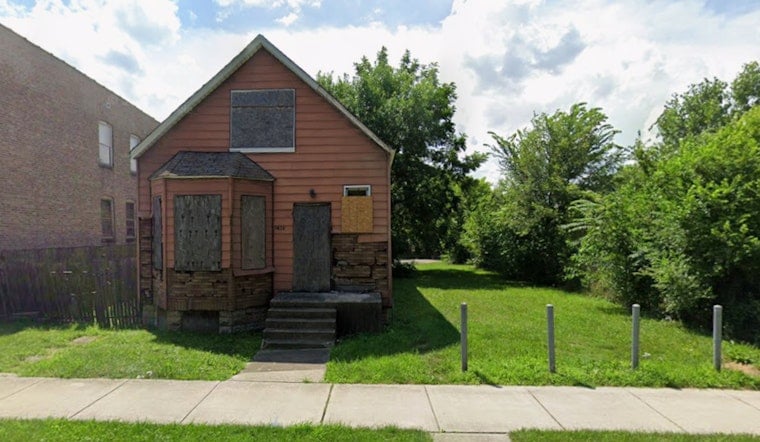
An 82-year-old Chicago homeowner says City Hall is trying to squeeze her for roughly $233,000 tied to a long-vacant Back of the Yards house with no working plumbing. Diane Carli and her family say the bill, which the city claims reflects hundreds of thousands of gallons of water use, has left her physically ill from stress and terrified that the city will reach into her pension checks. Her alderman has been pressing her case at City Hall, but so far the Water Department and the city’s legal office have refused to wipe the slate clean.
According to CBS Chicago, a new water meter was installed at Carli’s vacant property in late 2024. Within just a few months, the account showed more than 500,000 gallons of water supposedly used and a bill of about $233,439.90. The Water Department sent the account to collections and notified the family that it might go after pensions to collect the tab. Carli told reporters she never asked for service at the boarded-up, gutted house and that after the meter was swapped out, the replacement has registered zero usage.
City Council review and the Leak Relief program
City Council committee records show Ald. Raymond Lopez pressed the city comptroller to use Chicago’s Leak Relief Pilot Program to erase the bill tied to Carli’s property at 5434 S. Wolcott Ave. According to the City Council committee minutes, department attorneys told alderpersons the substitute order was improper because Carli’s case does not meet all the eligibility requirements. They also warned that, under current rules, usage recorded by a meter “cannot be reduced or waived.” Committee members put the measure on hold and asked staff to consider a possible legislative fix and a temporary pause on collection efforts while the case is reviewed.
Family says meter swap proves error; city offers limited credit
The Carli family argues the Water Department’s own meter replacement is the smoking gun. They say the original meter produced the giant spike while the new device has stayed firmly at zero, which they see as clear evidence that something went wrong with the first one. As NBC Chicago reported, Ald. Lopez pushed for a joint site visit with the comptroller and Water Department so city officials could see the boarded-up house for themselves.
The City Council committee minutes also note that the Water Department “offered to provide a $25,000 credit on the water bill” to cover fines and fees. That would knock down some of the charges but still leave nearly all of the alleged water usage, which is what the family insists they never incurred.
Not an isolated case
CBS Chicago’s “Getting Hosed” investigations have uncovered a series of similar water-billing nightmares, where meters or unmetered accounts have produced sky-high charges that do not seem physically possible. That pattern helped push the City Council to approve new relief options last year. The series has highlighted dozens of residents who received bills they say they could not possibly have run up, and advocates argue Carli’s case is more proof that the current relief programs still leave big holes.
Legal and financial stakes
From the city’s perspective, attorneys say they are boxed in by the law. They argue that meter-based water charges cannot simply be erased unless a case fits the specific criteria spelled out in the Leak Relief program, a position that department lawyers repeated during the committee hearing. In the meantime, the account remains in collections, and the family says the city has threatened to garnish pensions to collect the debt, a detail reported by NBC Chicago.
Ald. Lopez has told local reporters he plans to keep pushing for a fix, and the committee has asked the comptroller to weigh a temporary halt to collections while lawmakers work on a legislative solution. For now, the Carli family is stuck in limbo as political pressure and procedural wrangling slowly move the case toward some kind of formal answer. If the council cannot tweak the rules that blocked relief in Carli’s case, other families caught in similar billing disputes could be left staring at massive water bills that many neighbors say simply do not pass the smell test.





