

























































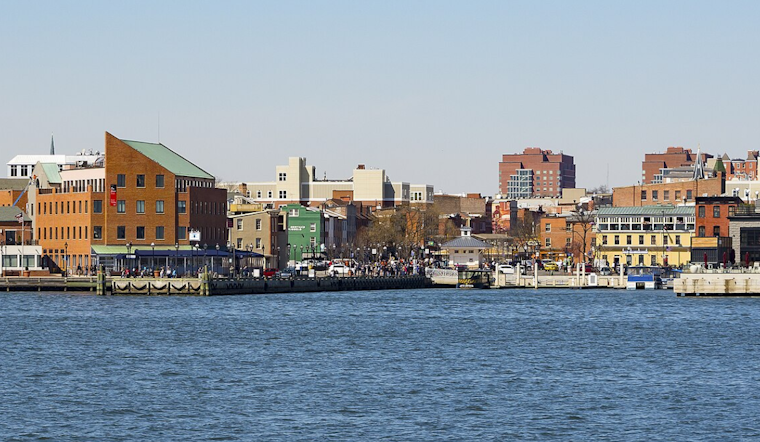
Baltimore is getting ready to plug in a new piece of water tech at Fells Point this summer, hoping it can finally answer the city’s favorite warm-weather question in real time: Is it safe to jump in the harbor or not? The small, cooler-sized testing unit is designed to tell officials whether the water is swimmable in minutes instead of days, borrowing a rapid-testing approach used to monitor the Seine during the 2024 Paris Olympics. The Waterfront Partnership says the pilot could help prevent last-minute event cancellations after heavy rain and make a permanent, reliably swimmable spot in the Inner Harbor a more realistic goal.
As reported by The Baltimore Banner, the Waterfront Partnership has leased a ColiMinder unit, nicknamed “Irina,” for trials at a dock near Fells Point. The Banner quotes Steven Mallette of Stelis Environmental Solutions saying the device can return a bacterial result in about 13 minutes, then runs a 15-minute self-cleaning cycle. The group told the paper it would be prepared to pay roughly $100,000 to buy a unit if the pilot proves useful.
How the device works
The ColiMinder automates sampling, applies a reagent that triggers an enzymatic reaction with fecal-indicator bacteria, and reports E. coli and enterococci levels to a dashboard in roughly 15 minutes, according to ColiMinder. The company says the technology has been in scientific testing since 2014 and is built for continuous, low-maintenance operation. That kind of near-real-time readout is a sharp contrast to conventional lab methods that can leave officials waiting a day or more for results.
Why faster testing matters
Traditional laboratory analysis for bacterial indicators typically takes 24 to 72 hours, which means public-health decisions often rely on data that is already out of date, according to the U.S. Environmental Protection Agency. The EPA has flagged that delay as a key reason to push for more time-relevant monitoring tools. Heavy rains can wash street and sewer runoff into urban waterways and make swimming unsafe for up to 48 hours after a storm, the Waterfront Partnership explained in a blog post about canceling last year’s Harbor Splash, per the Waterfront Partnership.
Local push and past setbacks
The Waterfront Partnership staged the inaugural Harbor Splash in 2024 to demonstrate that the harbor could be swimmable, but organizers postponed and then canceled the 2025 event after storms drove up bacteria levels, local TV reported. More than 200 people were expected to participate on the canceled 2025 date, and officials say the scrapped plans show how quickly runoff can derail even carefully timed events, according to WMAR-2 News. The new pilot is being pitched as a hedge against that kind of unpredictability: if rapid tests prove reliable, organizers could move toward weather-sensitive swim windows instead of fixed dates.
What to watch for this summer
The big questions now are reliability, regulatory acceptance and cost. The ColiMinder approach is not yet an EPA-recognized method in the United States, and company partners say they are pursuing approvals that would let officials rely on dockside readings for safety decisions, as reported by The Baltimore Banner. The Waterfront Partnership will run the leased unit through the summer testing season, and the results of the pilot will help determine whether more devices, at a price tag near $100,000 each, are worth the investment. For now, organizers say they still plan to factor in recent rainfall and rely on confirmatory lab tests when deciding whether to clear swimmers.





