

























































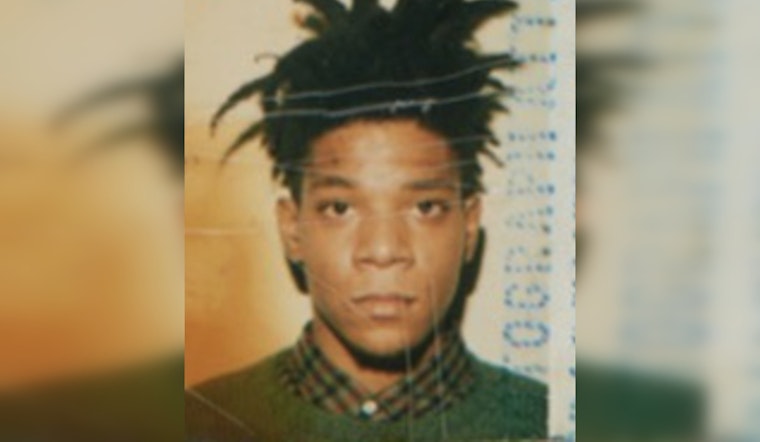
Jean-Michel Basquiat is coming home to Brooklyn in a big way next month, but not in the blue-chip, auction-block fashion you might expect. For five days in May, Our Friend, Jean: Early Works of Jean-Michel Basquiat will take over the Bishop Gallery, putting the spotlight on the scrappy, formative years before his paintings started selling for the price of townhouses. Centered on intimate pieces and photographs from Alexis Adler’s archive, plus loans from early friends and collaborators, the show also doubles as the official launch of the Bishop Arts & Research Center, which is positioning Brooklyn as the long-term research home for the exhibition.
What’s on view
The show pulls together more than 20 early works, ranging from drawings and mixed-media collages to painted doors, clothing and assorted ephemera, all sourced from people who actually knew Basquiat, according to the Bishop Gallery. Co-curators include photographer Alexis Adler, Erwin John and Stevenson Dunn Jr., and the lenders list reads like a roll call from the downtown scene: Jane Diaz, Hilary Jaeger, Katie Taylor, Lucy Sante and Al Diaz are all named on the show’s page.
The Bishop Gallery notes that Our Friend, Jean first debuted in Brooklyn in 2019 before heading out on the road to tour historically Black colleges and universities. Now it is circling back to the borough for a high-profile New York Art Week slot, offering locals a limited-time window into Basquiat’s early universe.
Adler’s archive and the Smithsonian tie
Much of what visitors will see comes straight from Alexis Adler’s personal archive: photographs and small works that have only gradually been slipping into public view. Part of that early material, including vintage prints, has been acquired by the National Museum of African American History and Culture, according to the Smithsonian.
Adler’s darkroom prints document Basquiat’s 1979–80 studio period, capturing him while he was living and working in downtown Manhattan. Those images recently reached wider audiences during Miami Art Week, as reported by Miami New Times, and they now anchor this Brooklyn stop with an unusually close-up view of the artist before the mythology kicked in.
Programs and launch events
The exhibition is not just a walk-through-and-go-home situation. The five-day run is set to be paired with panels, screenings and conversations featuring people who actually knew Basquiat, according to Time Out. Organizers say the show opens during New York Art Week, with programming tailored to scholars, collectors and students.
The idea is to make early Basquiat material accessible outside the auction circuit and to give the Bishop Arts & Research Center a running start on its mission to preserve and share cultural histories. In other words, less “price realized” chatter, more first-person stories.
Why it matters
Seeing Basquiat before the market turned his work into trophies offers a different kind of thrill. These pieces reveal process, experimentation and friendships rather than just investment value. Works from this period, when Basquiat was still tagging the city under the name SAMO, help trace the visual language that would later command eye-watering sums at auction. One 1982 canvas sold for roughly $110.5 million, per The Guardian, but shows like this pull the focus back to the cramped apartments, painted doors and improvised studios where that language was born.
The exhibition runs May 13–17, coinciding with New York Art Week, according to Time Out. For hours, ticketing details and the full schedule of talks and panels, see the Bishop Gallery event page. The gallery is at 630 Flushing Avenue in Brooklyn and lists weekday visits by appointment with weekend hours; press and research inquiries can be sent to the email address provided on the venue’s site.





