

























































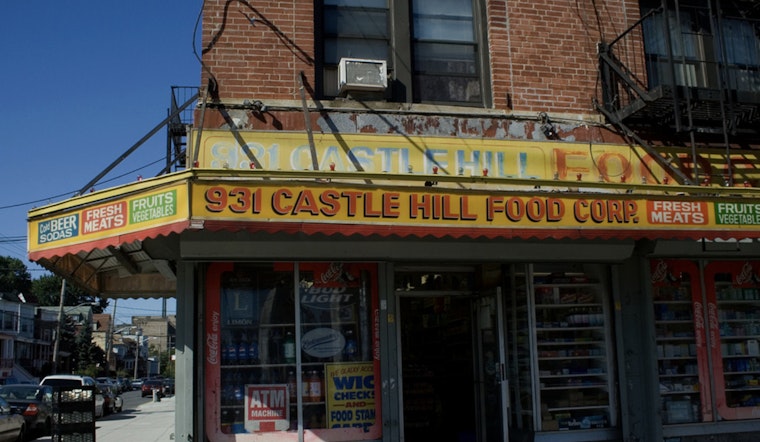
In big swaths of the Bronx, you can stroll a few blocks and hit a string of bodegas without ever passing a full-service supermarket. On neighborhood maps, that corner-store crush turns into hard numbers: some parts of the borough have dozens of bodegas for every traditional grocery, which means many residents either travel farther for food or settle for limited produce options. The skewed landscape is a major reason community groups and city planners keep circling back to one stubborn question: where is the Bronx supposed to get its fresh food?
Neighborhood maps show where the gaps are
Neighborhood-level data lay out the imbalance in stark relief. Belmont/East Tremont has about 37 bodegas for every supermarket. Mott Haven/Melrose comes in around 25 to 1, Fordham/University Heights about 20 to 1, and Highbridge/Concourse about 18 to 1, according to the Hunter College New York City Food Policy Center.
On the ground
Those numbers are not just abstract. A Bronx Times reporter counted 11 bodegas on a 0.7-mile walk to her preferred supermarket, a shorthand for the kinds of daily tradeoffs that many Bronx residents know all too well. The Bronx Times also notes that the borough ranks near the top of bodega-heavy areas in city and academic datasets.
Where residents actually buy produce
Local surveys and program evaluations suggest that what kinds of stores are nearby shapes where people actually buy their fruits and vegetables. A 2012 street-intercept survey in West Farms and Fordham found that most respondents reported buying most of their fruits and vegetables at supermarkets, while only about 4 to 5% said bodegas were their primary source. That pattern has been documented in academic reporting and city evaluations, including work published in PubMed Central and in the Health Department’s Shop Healthy materials and evaluations.
City programs have added supermarkets, but gaps remain
The city has tried to close the gap. Through the FRESH (Food Retail Expansion to Support Health) initiative, officials have incentivized about 30 supermarkets that now sit within walking distance of roughly 1.2 million New Yorkers, with several of those stores landing in the Bronx. The program’s Bronx locations are detailed in the NYC Department of City Planning FRESH report, but local advocates argue the new supermarkets only begin to meet demand.
Advocates say more is needed
“Access to quality, affordable, local supermarkets are essential element of any neighborhood’s food ecosystem,” Liz Accles of Community Food Advocates told the Bronx Times, echoing longstanding calls for deeper public investment. Advocates say incentives should be paired with stronger community benefits, technical assistance for independent grocers, and targeted support that helps bodegas stock fresh produce in a way that actually works for their bottom line.
Across the Bronx, maps and shopper surveys alike point to a problem that is not just about how many stores there are, but what those stores actually carry. In neighborhoods where bodegas outnumber supermarkets by double- or triple-digit margins, residents and organizers argue that food policy fixes will have to be both larger in scale and more tailored to local needs than past efforts, and patience is wearing thin.




