

























































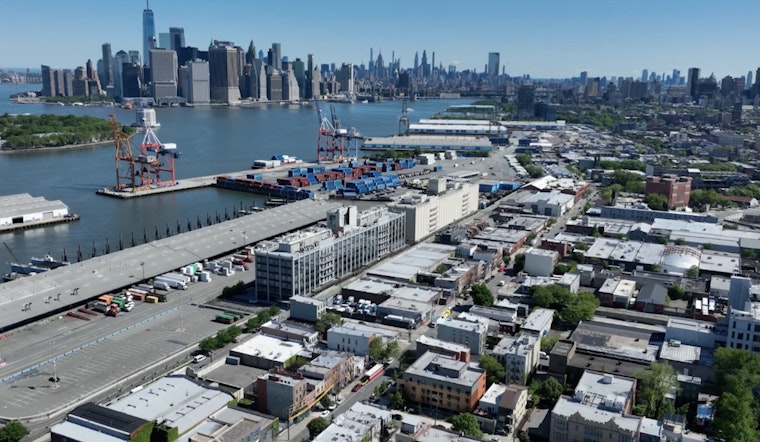
Publicly, Comptroller Brad Lander has been one of the loudest critics of New York City’s plan for the Brooklyn Marine Terminal. Privately, he was nudging officials and power players to back key parts of that very same redevelopment earlier this year, according to new reporting. The revelation lands just as the city gears up an Environmental Impact Statement for a bruising land use fight over roughly 122 acres of Red Hook waterfront.
Crain's: Lander's Behind-the-Scenes Push
Crain's New York Business reports that documents and outreach records show Lander quietly reached out this year to New York City Economic Development Corporation staff, maritime interests and other local leaders to urge support for elements of the city’s Vision Plan. According to that reporting, those conversations happened before he went public with sharp complaints about the project’s process and scope.
Lander's Formal Comments
On the record, Lander has struck a more cautious tone. In a formal submission to the environmental review, he called for a short pause so the city could gather “additional information, evaluation of options, and community engagement,” and he urged that the Environmental Impact Statement include a “more port” or “all port” alternative. In comments filed March 31, 2026, he warned that “The decisions being made regarding the future of the BMT are highly consequential,” according to his written remarks submitted by Brad Lander.
What the City Proposes
The city’s preferred Vision Plan from the Economic Development Corporation would reshape the 122-acre marine campus into a modern maritime hub paired with new housing and public open space, while reserving part of the site for port operations. The proposal sits inside the broader “Harbor of the Future” push and is being advanced by NYCEDC as lead agency. As laid out by NYCEDC, the plan aims to strike a balance between maritime infrastructure and mixed-use development.
Neighbor And Labor Concerns
Neighborhood groups, some local elected officials and maritime advocates argue the process moved too fast and that a truly port-first option was never fully on the table. In response to pressure, the city late last month extended the Draft Scope of Work comment period to May 8 so the public could review 25 maritime proposals submitted under a recent request for expressions of interest. Critics quoted by the Brooklyn Eagle contend the EDC’s preferred vision would convert more than half the terminal to housing, about 6,000 units, while leaving roughly 60 acres for maritime use. The extension and local backlash were detailed by the Brooklyn Eagle.
Where This Leaves The Review
State records now reflect the draft scope of work and the formal environmental review, and the Department of Environmental Conservation’s City Environmental Quality Review notice confirms that the EIS is underway with an extended public comment window. Political friction has already shown up in task force meetings and repeated vote delays, highlighting an unresolved fight over whether maritime, mixed-use or hybrid options should drive the analysis. The state’s notice is posted by NYSDEC, while earlier postponements of task force votes were reported by The City.
Why It Matters
The behind-the-scenes outreach described by Crain's complicates the sell that the Vision Plan emerged solely from a transparent, community-driven process. Instead, the disclosures raise new questions about who was steering early advocacy around some of the biggest land use choices on the Red Hook waterfront as the EIS advances. As public comment continues, local leaders, maritime operators and developers will be watching to see how those private conversations influence which alternatives get serious consideration and which tradeoffs City Hall ultimately embraces, according to Crain's New York Business.





