

























































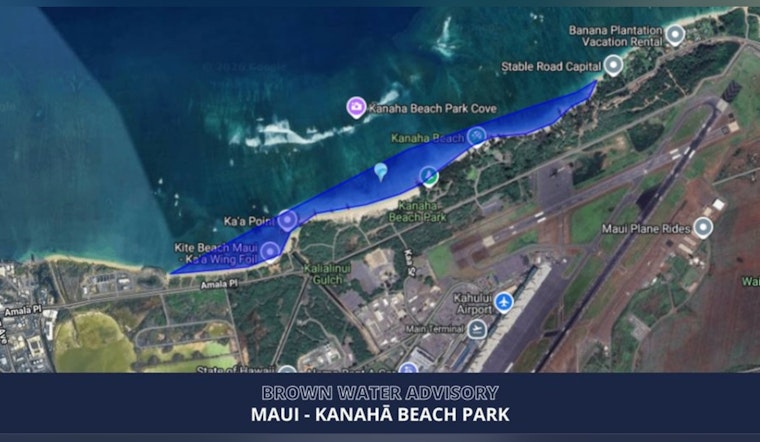
After heavy rains soaked Kahului, the Hawaiʻi State Department of Health put Kanahā Beach Park under a brown water advisory, warning that brown or murky nearshore water may contain pollutants carried by runoff. The advisory urges beachgoers to skip swimming, wading or any contact with discolored water for now. Local lifeguards and park crews may post warning signs while the state keeps an eye on conditions and collects follow-up samples.
According to the Hawaiʻi State Department of Health, the #BrownWaterAdvisory for Kanahā Beach Park was issued Tuesday and the public is being directed to official channels for updates. The notice is based on visual observations and routine monitoring that indicate storm runoff has entered nearshore waters.
A #BrownWaterAdvisory has been issued at Kanahā Beach Park on Maui. For more information: https://t.co/LsRv8MSpKn https://t.co/dA0TiM4uRW
— Hawaiʻi State Department of Health (@HawaiiDOH) April 14, 2026
What a brown water advisory means
Brown water advisories are issued when nearshore waters turn brown, turbid or cloudy because storm runoff can wash soil, sewage, pesticides and other contaminants into the ocean, according to the Hawaiʻi Department of Health Clean Water Branch. The Clean Water Branch notes that these alerts often follow heavy rain or flash-flood warnings, and that water can still be risky even when it no longer looks obviously brown. People at higher risk, including young children, older adults, pregnant people and anyone with a weakened immune system, are urged to stay out of affected waters until officials cancel the advisory.
When to get back in the water
Local reporting and public-health guidance commonly suggest waiting 48 to 72 hours after heavy rain and until a beach has had full sun before jumping back into ocean activities, though timing can vary by watershed and beach. As Maui News explains, tidal flushing and sunshine help dilute sediment and lower bacterial counts, but if the water still looks murky or debris is floating around, it is a sign to stay out longer. Anyone who develops stomach, ear, eye or skin symptoms after contact with contaminated water should reach out to a health care provider.
How to stay informed
State and county emergency briefings this week highlighted flood watches and several island advisories that triggered Clean Water Branch notices, underscoring how quickly heavy rain can lead to brown water events. Updates on extended flood watches and word that brown water advisories were active for multiple islands this week were posted by the Governor’s Office. For the most current beach-by-beach status, check the Hawaiʻi Department of Health Clean Water Branch beach monitoring pages and sign up for Clean Water Branch alerts, and keep an eye out for local signage and ocean-safety announcements from Maui County.





