

























































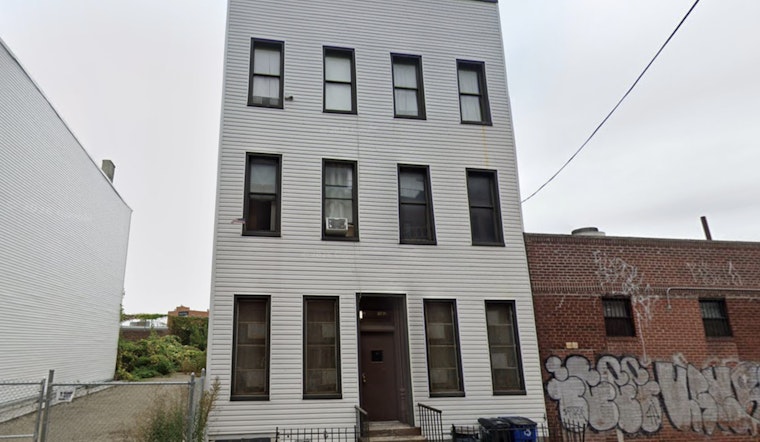
A Brooklyn Housing Court judge has put the city’s Department of Housing Preservation and Development in the hot seat, holding the agency in contempt after it repeatedly failed to fix a city owned apartment at 143 Noll Street in Bushwick. Tenant Julian Butler, who received the keys in January 2025, has been paying rent on a unit he could not live in because it had no electricity, dangerously uneven floors, broken windows and a bathroom he could not use. After multiple earlier repair orders went nowhere, the judge ordered HPD to get the work done and to give Butler relief on the rent he has already paid.
Contempt finding and court orders
The court granted Butler’s motion to hold HPD in contempt and directed the agency to complete the work and report back to the judge. As detailed by Casemine, the ruling requires HPD to finish the repairs and update the court within 30 days. The decision also gives Butler a credit for all rents paid since he signed the lease and blocks HPD from collecting any more rent until the apartment is actually habitable.
Judge's rebuke
In a sharply worded opinion, Judge Enedina Pilar Sanchez wrote that "renting substandard residential units to communities historically living in substandard housing perpetuates a cycle that must end." The decision found that the bathroom work was poorly done, the sink is still missing and the apartment still lacks an electrical meter, leaving Butler unable to move in. This account appears in the court’s published opinion, according to Justia.
HPD responds
HPD has pushed back, saying it installed new flooring and renovated the bathroom before Butler moved in and blaming the lack of power on Con Edison, while insisting it is working on the issue. In a statement to the New York Post, spokesperson Kim Moscaritolo said the department "will keep working until Mr. Butler has the safe home he deserves." The New York Post also reported that Butler was offered an HPD subsidized apartment for about $700 a month, but that alternative unit was not ready either.
City enforcement and HPD's workload
The case puts an unusual spotlight on an agency that not only enforces housing standards but also manages some city owned units of its own. HPD’s 2025 lead compliance report notes that the department performs tens of thousands of inspections every year and oversees a small portfolio of city owned buildings through its Office of Asset and Property Management. The same report explains HPD’s emergency remediation work when private landlords do not act, providing context for why the court pressed for concrete, time specific steps in Butler’s case; see HPD's 2025 report.
Deadlines and next steps
The judge’s Feb. 24, 2026 decision gives HPD 60 days to complete the repairs and 30 days to file a status update with the court. As detailed by Casemine, that timetable sets an April 24, 2026 target to finish the work and a March 26, 2026 deadline for the agency’s written update. The opinion notes that civil contempt is intended both to pressure an agency or landlord to comply and to compensate tenants who have been harmed, and it allows Butler to return to court to seek more relief if HPD does not follow through.
Local reaction
Butler’s lawyer, David Schwartz, told the New York Post that the ruling was "a real slap in the face that the government really deserved here." Tenant advocates say the case highlights the tension that arises when the city is both landlord and enforcer, and they hope the judge’s strict deadlines lead to visible, on the ground repairs. For now, residents and advocates are watching HPD’s upcoming court filings to see whether the agency finally makes the unit safe.
HPD now faces a public timetable: repairs due by April 24, 2026, and a March 26, 2026 status report to the court. If the agency misses those milestones, Butler can seek further intervention from the judge, and the case could become a test of whether the city holds itself to the same housing standards it applies to private landlords.





