

























































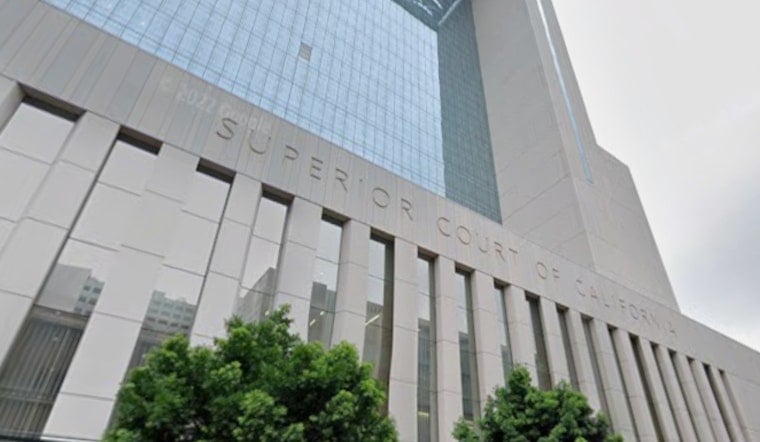
In a win that has homeowners associations across California breathing a little easier, a San Diego County judge last Friday sided with the Mystic Point Homeowners Association and shut down a Carlsbad condo owner’s plan to turn his garage into a rental unit. The ruling caps a year-long legal brawl over a deceptively simple question: does California’s 2019 accessory dwelling unit law override HOA rules inside condo developments, or not? Superior Court Judge Victor Torres decided the statute’s wording did not clearly cover the Mystic Point parcel, which left the HOA in control.
At the heart of the fight was AB 670, the 2019 law that added Civil Code §4751 and wipes out any association rule that "effectively prohibits or unreasonably restricts" building or using accessory dwelling units on lots "zoned for single-family residential use." The law still allows "reasonable restrictions" that do not unreasonably drive up costs. Mystic Point’s attorneys argued that the parcel where the unit sits is not zoned exclusively for single-family use, and that the HOA’s ban on converting garages is therefore still valid.
Judge says law's language does not clearly cover condos
Judge Torres agreed with the association. In his written ruling, he said lawmakers "could have easily" spelled out that the statute applies to condo developments but "did not," according to CalMatters. He added that using the law to override rules in a development with multi-use zoning would be "contrary to the legislative intent" and told the court he wished he had "a stronger feeling one way or the other." The judge also signaled that the California Court of Appeal may ultimately have to sort out how far the statute really goes.
Owner says he followed state guidance
Unit owner Adam Hardesty, who has served on the Mystic Point board, says he did not exactly wing it. He consulted the state Housing and Community Development department, relied on a planner’s opinion, then started gutting his garage in reliance on that guidance. He now estimates that he and his wife have poured more than $100,000 into construction and legal bills, and he told reporters he would like to appeal but does not have the money to do it, according to KPBS. The HOA, for its part, maintained that its governing documents plainly forbid garage conversions and that the board was simply enforcing long-standing rules.
What this means across California
The decision cuts off one tactic homeowners have used to fight HOA bans and highlights how a few words in a statute can decide whether a rental project lives or dies. More than 14 million Californians live in community associations, roughly one in three residents statewide, according to the Foundation for Community Association Research. In this case, the exact text of AB 670 and its "single-family" language were the focal point of Torres’ opinion, and that tight reading could influence how other judges handle similar HOA challenges.
Legal implications and next steps
Because Torres based his ruling on how the statute is written and how the property is zoned, the case is a prime candidate for appeal and could prompt either an appellate court decision or a legislative tune-up on how ADU protections apply inside common-interest developments. For now, state housing officials and the attorney general’s office generally do not step in to police HOA enforcement, which leaves private lawsuits or a change in the law as the most likely routes to broader change, according to KPBS. Until higher courts or lawmakers weigh in, both homeowners and HOA boards will be watching closely to see whether AB 670 was truly meant to cover condo communities like Mystic Point.





