

























































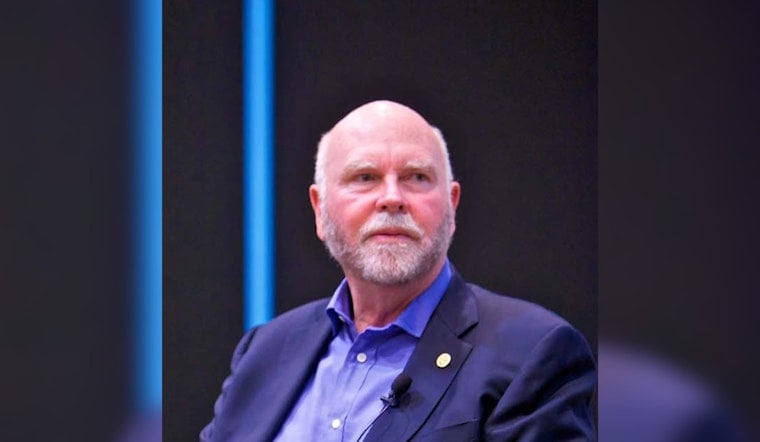
J. Craig Venter, the La Jolla biologist who helped lead the race to decode the human genome and later pioneered synthetic biology, died yesterday in San Diego. He was 79. Venter's work, from Celera's shotgun sequencing to laboratory-built genomes at his institute, transformed how researchers read and rewrite DNA and helped make San Diego a global genomics hub.
In a statement to The San Diego Union-Tribune, the J. Craig Venter Institute said Venter's death followed a brief hospitalization for unexpected side effects that arose from treatment of a recently diagnosed form of cancer. The institute confirmed he died at a local hospital but gave no further medical details.
Venter's push for faster, computation-driven sequencing became one of the defining scientific rivalries of the era, as private and public teams raced to map the human genome. As detailed by Britannica, he founded Celera Genomics in 1998 and used whole genome "shotgun" sequencing that helped produce a draft announced at a White House ceremony in 2000.
From Genome Race to Synthetic Life
Venter later moved from reading genomes to designing them, leading teams that constructed and transplanted a chemically synthesized Mycoplasma genome in 2010. The experiment, often described as the first self-replicating synthetic cell, showed that a digitally designed chromosome could be assembled and transplanted to produce a viable cell, according to the scientific summary of the work (NCBI). That achievement helped launch synthetic genomics as a field and provoked debates about oversight, applications and ethics.
Local Footprint and Big Bets
Beyond papers and headlines, Venter was a serial entrepreneur and institution builder whose projects anchored a chunk of San Diego's life science economy. The J. Craig Venter Institute notes his roles founding TIGR and Celera and his work with startups such as Synthetic Genomics and Human Longevity, tying research, sequencing capacity and commercial ambitions to La Jolla and beyond (JCVI).
Local reporting has also tracked his health and outlook. The San Diego Union-Tribune reported that genetic testing helped uncover an aggressive prostate cancer that led to surgery in 2016, and in past interviews, Venter described himself as "self-retired" while still pursuing new projects, saying, "I don't see any reason why I can't live another 10 years."
Closer to home, JCVI had committed roughly 50,000 square feet at IQHQ's RaDD waterfront district and was expected to begin occupancy in 2026 to expand sequencing capacity and recruit talent, a relocation the institute said would deepen San Diego's waterfront biotech cluster (JCVI press release). Venter's scientific legacy, the labs, companies and trained researchers, will remain a visible part of the city's life science landscape.



